Biotech & Research

Terns' 'Unprecedented' CML Data Puts TERN-701 on Track to Challenge Novartis' Scemblix

Image
Terns’ ‘Unprecedented’ CML Data Puts TERN-701 on Track to Challenge Novartis’ Scemblix

SHERIDAN, WYOMING - December 11, 2025 - Terns Pharmaceuticals is rapidly emerging as a serious contender in chronic myeloid leukemia (CML), after early clinical data for its allosteric BCR/ABL1 inhibitor TERN-701 more than doubled response rates seen with Novartis' approved STAMP inhibitor Scemblix in comparable settings and sent the biotech's share price sharply higher.

Best-in-Disease Early Efficacy Raises the Bar in CML

At the American Society of Hematology (ASH) annual meeting, Terns reported Phase I data from the CARDINAL trial in previously treated CML patients, with 38 participants evaluable for efficacy. TERN-701 achieved a major molecular response (MMR) rate of 75% at week 24, with 64% of patients reaching MMR overall in the dataset presented. The investigational agent also supported simple once-daily dosing without a food effect, improving convenience relative to many existing tyrosine kinase inhibitor (TKI) regimens.
AGC Biologics to Scale AAVantgarde's Dual-Vector Gene Therapies for Inherited Retinal Blindness

Image
AGC Biologics to Scale AAVantgarde’s Dual-Vector Gene Therapies for Inherited Retinal Blindness

SHERIDAN, WYOMING - December 03, 2025 - AGC Biologics has signed a new manufacturing agreement with AAVantgarde Bio to produce dual-vector AAV gene therapies for Stargardt disease and retinitis pigmentosa, positioning its BravoAAV™ platform at the center of next-generation treatments for inherited retinal disorders with no approved therapies.

Dual-vector AAV platform targets previously "untreatable" retinal genes

Under the deal, AGC Biologics will provide GMP manufacturing for AAVantgarde's two clinical-stage candidates: AAVB-039 for Stargardt disease, the most common inherited form of macular degeneration in children and young adults, and AAVB-081 for retinitis pigmentosa caused by Usher syndrome type 1B. Both programs are in Phase 1/2 trials, with AAVB-039 being tested in the U.S., UK and Europe, and AAVB-081 representing the first-ever dual AAV gene therapy in an ocular indication.

AGC Biologics and Repair Biotechnologies Join Forces on mRNA Therapy Targeting Atherosclerotic Cardiovascular Disease

Image
AGC Biologics and Repair Biotechnologies Join Forces on mRNA Therapy Targeting Atherosclerotic Cardiovascular Disease

SHERIDAN, WYOMING - December 03, 2025 - AGC Biologics has signed a strategic development and manufacturing agreement with Repair Biotechnologies to advance a novel mRNA therapeutic aimed at rapidly stabilizing and shrinking atherosclerotic plaques, addressing what both partners describe as the leading single cause of human mortality worldwide.

Targeting plaque biology in a high-burden cardiovascular market

The collaboration focuses on an mRNA-based therapy designed to stabilize and reduce atherosclerotic plaques in major blood vessels, directly tackling the root pathology behind heart attacks and strokes. Rupture of unstable plaque and subsequent thrombotic events account for an estimated 27% of all human deaths, underscoring the strategic importance of any technology capable of reversing or halting plaque progression.

AGC Biologics and Rarity PBC Join Forces to Industrialize Gene Therapy for "Bubble Baby" ADA-SCID

Image
AGC Biologics and Rarity PBC Join Forces to Industrialize Gene Therapy for “Bubble Baby” ADA-SCID

SHERIDAN, WYOMING - December 03, 2025 - AGC Biologics is partnering with public benefit company Rarity PBC to bring a potentially life-saving gene therapy for Adenosine Deaminase Severe Combined Immunodeficiency (ADA-SCID) through commercial manufacturing and toward FDA approval, underscoring how CDMO collaborations are becoming central to translating academic breakthroughs into scalable rare disease treatments.

From transformational trials to a U.S. commercial pathway

Under the new agreement, AGC Biologics will provide end-to-end development and GMP manufacturing for Rarity's ex vivo autologous gene therapy RDP-101. If approved, RDP-101 would become the first gene therapy commercially available in the United States to reverse ADA-SCID, a rare inherited immunodeficiency that leaves infants dangerously exposed to severe, recurrent infections.

Roche's Trontinemab Data Put the Swiss Pharma Back in the Alzheimer's Race

Image
Roche’s Trontinemab Data Put the Swiss Pharma Back in the Alzheimer’s Race

SHERIDAN, WYOMING - December 02, 2025 - Roche is re-entering the frontline of Alzheimer's disease drug development, after new Phase I/II data showed its next-generation antibody trontinemab cleared amyloid plaques below the threshold of positivity in the vast majority of treated patients while keeping key safety signals under tight control.

Early Brainshuttle data show deep amyloid clearance

In the ongoing Brainshuttle AD Phase I/II study, 92% of patients treated with trontinemab achieved amyloid levels below 24 centiloids, the PET scan threshold commonly used to define amyloid positivity. The data, presented at the 2025 Clinical Trials on Alzheimer's Disease (CTAD) meeting, mark one of the strongest plaque-clearing signals yet seen in a mid-stage program.

Imvax Seeks FDA Path for IGV-001 After 6-Month Survival Gain in Glioblastoma

Image
Imvax Seeks FDA Path for IGV-001 After 6-Month Survival Gain in Glioblastoma

SHERIDAN, WYOMING - December 02, 2025 - Imvax is moving its autologous glioblastoma immunotherapy IGV-001 toward the FDA, despite a missed primary endpoint in Phase IIb, betting that a six-month overall survival benefit and a novel "synergistic" treatment concept will resonate in a setting where outcomes have barely budged in two decades.

Phase IIb data highlight survival benefit despite PFS miss

In a mid-stage trial of 99 patients with newly diagnosed glioblastoma, Imvax evaluated IGV-001, a biologic-device combination, against placebo. While the study did not achieve its primary endpoint of improving progression-free survival, the company reported a median overall survival of 20.3 months in the treatment arm-around six months longer than in the control group.

Roche's Alzheimer's Comeback Signals a New Competitive Phase for Disease-Modifying Therapies

Image
Roche’s Alzheimer’s Comeback Signals a New Competitive Phase for Disease-Modifying Therapies

SHERIDAN, WYOMING - December 02, 2025 - After years of volatility in Alzheimer's R&D, Roche's re-emergence with positive early data for trontinemab is reshaping expectations for the next competitive cycle in disease-modifying therapies, signaling that big pharma is not done pushing for better outcomes in this high-risk, high-need market.

From Aduhelm's fallout to a more mature Alzheimer's market

The modern Alzheimer's era was defined-some would say scarred-by the 2021 approval of Biogen and Eisai's Aduhelm, a controversial and costly monoclonal antibody that ultimately failed to deliver convincing clinical benefit and was later withdrawn. The backlash damaged Biogen's reputation and, for a time, cast doubt on the entire amyloid-directed approach, raising questions about regulatory standards and payer willingness to back expensive, marginally effective therapies.

Building the Next Generation of Biologics: How Protein Engineering Platforms Are Catching Up with Complexity

Image
Building the Next Generation of Biologics: How Protein Engineering Platforms Are Catching Up with Complexity

SHERIDAN, WYOMING - December 02, 2025 - As bispecifics, antibody-drug conjugates (ADCs), protein degraders and AI-designed mini-proteins move rapidly into clinical development, discovery teams are confronting a new bottleneck: not target ideas, but the practical engineering and scalable production of molecules that strain conventional biologics workflows.

From monoclonals to a radically more complex biologics toolbox

Monoclonal antibodies still anchor the biologics market, with more than 160 FDA approvals and a dominant share of global drug revenues. But the modality mix is shifting fast. More than 200 ADCs are now in clinical stages, bispecific approvals have climbed to 19 with sales above $12 billion in 2024, and regulators are increasingly supportive of novel protein formats.

Six Cell Therapy Holdouts Double Down on CAR T and Autoimmune Plays as Big Pharma Retreats

Image
Six Cell Therapy Holdouts Double Down on CAR T and Autoimmune Plays as Big Pharma Retreats

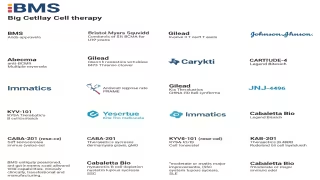
SHERIDAN, WYOMING - December 02, 2025 - As several large pharmas pull back from cell therapy, a core group of biopharma players is doubling down on CAR T and next-generation approaches, positioning themselves to capture long-term value in oncology and autoimmune disease even as near-term sentiment cools.

Big pharma exits reshape expectations, not potential

Over the past year, the cell therapy field has seen a string of high-profile retreats. Takeda halted new investments in the modality and is offloading its pipeline and platforms after more than eight years of heavy spending. Novo Nordisk followed by terminating all cell therapy work, including a type 1 diabetes program, with nearly 250 roles cut. Belgian biotech Galapagos also shut down its cell therapy business after failing to find a buyer.

HAE Market Pivots to RNA and Gene Therapies as Patient 'Stickiness' Slows Uptake

Image
HAE Market Pivots to RNA and Gene Therapies as Patient ‘Stickiness’ Slows Uptake

SHERIDAN, WYOMING - December 02, 2025 - A wave of first-in-class hereditary angioedema (HAE) therapies is reshaping the U.S. Biotech & Research landscape, but questions remain over how quickly clinicians and patients will adopt these options in an already well-served rare disease market.

New approvals expand hereditary angioedema treatment choices

The HAE pipeline has accelerated dramatically, moving from basic C1 esterase inhibitors to sophisticated RNA-targeting and gene-editing approaches. The disease's life-threatening swelling attacks, including airway involvement, have long justified investment in both acute and prophylactic care, with the first FDA-approved preventive and on-demand therapies arriving in 2008 and 2009.