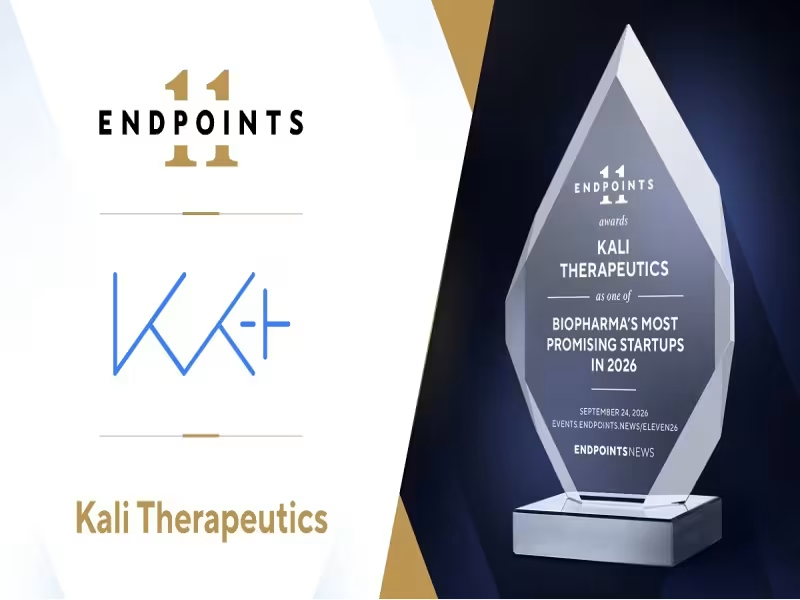
San Mateo, Calif. – September 25, 2026 -- Kali Therapeutics has been named one of the 11 most promising private biotechnology companies in the 2026 Endpoints 11, a list curated annually by Endpoints News editors from hundreds of private candidates.
Kali advanced two clinical candidates and closed a Sanofi licensing deal in just over two years
Founded in July 2024, the clinical-stage biotech moved from formation to two molecules in the clinic and a worldwide partnership with Sanofi inside roughly two years. The honorees were announced Thursday, September 24, 2026, at an awards gala at The State Room in Boston.
Sanofi licensed KT501 for $180 million upfront with up to $1.05 billion in milestones
Kali granted Sanofi a worldwide exclusive license to KT501 for $180 million in upfront and near-term payments, plus up to $1.05 billion in potential milestone payments and tiered royalties. The FDA cleared the Investigational New Drug application for KT501, and the company dosed its first patient in the Phase 1a rheumatoid arthritis trial in March 2026.
A CD3-masking platform aims to separate T-cell engager potency from toxicity
Kali's proprietary technology is designed to enable deep B-cell depletion in both peripheral blood and tissue while limiting cytokine release, addressing a toxicity constraint that has restricted T-cell engager use in autoimmune disease. The pipeline includes KT502, a CD19 x CD3 bispecific T-cell engager currently in Phase 1, and KT209, a CD19 x CD20 x CD3 trispecific antibody undergoing IND-enabling activities with a first-in-human study planned for the first half of 2027. Kali is extending the same masking approach to additional cell types implicated in autoimmune and inflammatory disease.
LYFE Capital, Kali's earliest institutional investor, cites execution pace and remission thesis
Derek Yuan, Ph.D., Partner at LYFE Capital and a Kali board member, said the firm backed founder and CEO Weihao Xu at the company's founding and has tracked its progress from formation to the clinic and the Sanofi partnership in roughly two years. Xu said the platform has moved from an engineering concept to two molecules in clinical trials, with the company's stated aim being a durable immune reset rather than another chronic autoimmune therapy.