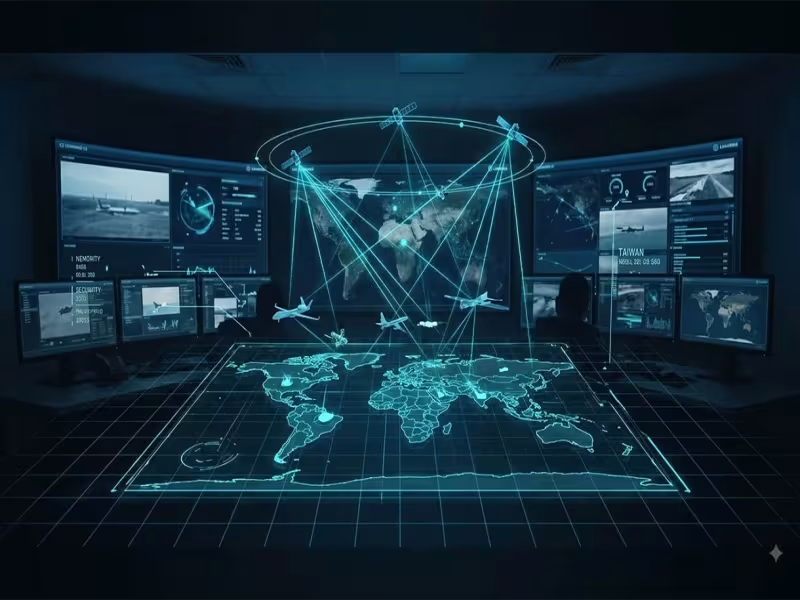
ASIA-PACIFIC — November 16, 2026 -- L3Harris Technologies demonstrated a multi-vendor defense network across four mission scenarios at EVEREST: Pacific Vigilance, with six other companies named in the architecture. The company says the event targets smaller nations and regional coalitions that are investing in multi-domain technology to counter neighbors with larger militaries.
Palantir's Maven system fuses sensor data while L3Harris supplies the radio layer
L3Harris says its software-defined, interoperable systems served as the bridge across the demonstration. Palantir's AI-enabled Maven Smart System fused intelligence and sensor data across tactical networks in real time, according to the company, to shorten target acquisition-to-elimination timelines. Amazon LEO satellite internet and Link 16 data links provided connectivity across echelons.
By our count, the release names four L3Harris-branded products: VAMPIRE, Drone Guardian, the Wraith MANET waveform and Wraith Shield. It credits six other companies with parts of the stack:
- Palantir: Maven Smart System
- Amazon LEO: satellite internet
- Champion Auto: C5ISR shelter
- Booz Allen: Tactical Operations Center – Light (TOC-L)
- RTX: Sentry, which controls precision fires
- Rayvatek: eVTOL unmanned aircraft
The release does not attribute the joint electronic warfare center or the airborne early warning and control system to any supplier. L3Harris executive Kevin Steubing says the demonstration unites dozens of disparate technologies into one network.
Four scenarios run from drone detection to civil-military response
The scenarios cover persistent sensing and early detection, strategic and operational fires coordination, all-out defense concepts, and civil-military hybrid resilience.
In the first, a joint electronic warfare center analyzes electromagnetic signatures and an airborne early warning system tracks incoming objects. VAMPIRE, Drone Guardian and electro-optical/infrared sensors work with the network against swarming drones and provide a kinetic counterattack. In the second, Wraith MANET provides anti-jam voice and data links to precision fires controlled by RTX Sentry. In the third, a Rayvatek eVTOL aircraft carries embeddable L3Harris radios, and Wraith Shield software adds sense-and-protect functions to software-defined radios.
Three of four scenarios connect military networks to civilian infrastructure
The first scenario integrates AI-enabled command and control with existing civil communications infrastructure. The second uses Booz Allen's TOC-L to bridge Project 25 (P25) civil networks and tactical communications. The fourth links P25-enabled tactical radios with civilian, police, fire and medical resources. That is three of four scenarios, or 75%, with a civil-network interface.
For civil agencies, this means their communications become a design requirement of the military architecture. The release says civil, military and reserve forces would operate under predefined authorities and rules of engagement.
Jack Glasgow, an L3Harris accounts management principal, says the company and its partners are prepared to meet current operational needs while developing technology for the future security environment. The release names no customer, contract value, date or venue for the demonstration.