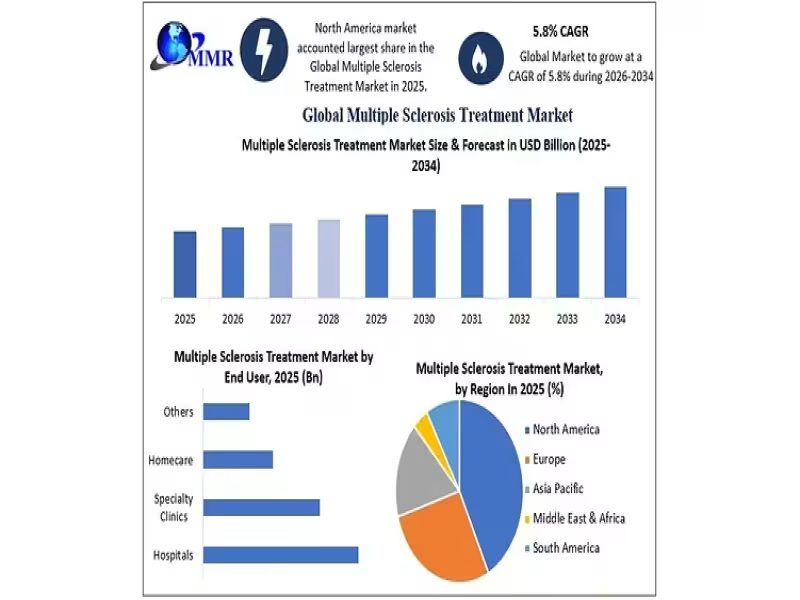
Pune, India – September 24, 2026 -- The global multiple sclerosis treatment market reached USD 26.76 billion in 2025 and is forecast to climb to USD 44.45 billion by 2034, expanding at a 5.8% CAGR, according to a new report from Maximize Market Research.
Disease-modifying therapies and biologics drive current market expansion
Rising MS prevalence, improved diagnostic capabilities, and growing adoption of immunomodulators, immunosuppressants, interferons, oral disease-modifying therapies (DMTs), and monoclonal antibodies are fueling demand across relapsing-remitting (RRMS), primary progressive (PPMS), secondary progressive (SPMS), and clinically isolated syndrome (CIS) patient segments. High-efficacy biologics and oral treatment options are increasingly displacing older therapy classes as patients and physicians prioritize convenience and disease-progression control.
North America dominates 2025 revenue share as Asia-Pacific emerges as fastest-growing region
North America led the market in 2025, underpinned by high MS prevalence, advanced neurology infrastructure, and strong pharmaceutical R&D activity in the United States, with Canada and Mexico contributing through expanding treatment access. Europe follows closely, with Germany, the UK, France, Italy, Spain, Sweden, and Austria showing rising DMT and monoclonal antibody uptake supported by favorable reimbursement frameworks. Asia-Pacific is positioned for the strongest growth trajectory, driven by rising healthcare expenditure and improving diagnostic access in China, Japan, India, South Korea, and Australia, while the Middle East & Africa market remains in early-stage development.
High treatment costs and limited neurological care access constrain broader adoption
Long-term MS management costs, expensive monoclonal antibody therapies, and limited reimbursement coverage restrict patient access, particularly in emerging economies. Shortages of specialized neurologists, advanced diagnostic facilities, and trained healthcare professionals further limit adoption of innovative DMTs in several regional markets, creating persistent accessibility gaps despite therapeutic advances.
BTK inhibitors and remyelination research expand the next-generation treatment pipeline
Pharmaceutical and biotechnology companies are increasing investment in BTK inhibitors, neuroprotective therapies, remyelination approaches, stem cell research, and biomarker-based precision medicine targeting progressive MS forms that remain harder to treat with existing DMTs. Digital health tools and remote monitoring solutions are also being integrated into disease management protocols, supporting personalized treatment selection and long-term patient tracking as clinical pipelines expand through 2034.