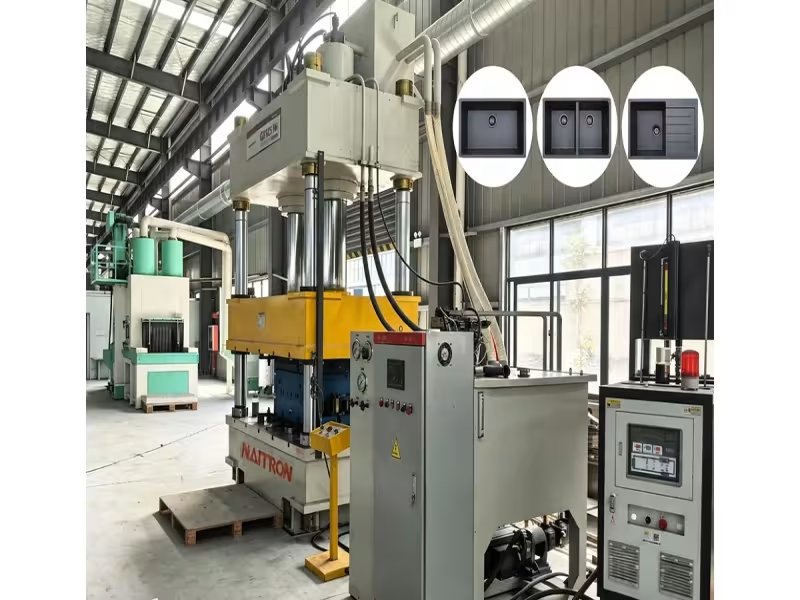
Hubei – September 28, 2026 -- Hubei Nature New Material Sanitary Appliance Co., Ltd. (NAITRON) has integrated PLC-based digital controls with its patented thermosetting molding technology (TMT) to manufacture granite composite kitchen sinks, targeting more consistent quality and higher-volume output for OEM and ODM clients worldwide.
Digital controls cut reliance on manual production steps
The company's molding system uses automated material dosing and an independent intelligent temperature management system, reducing labor costs and human error across the production line. NAITRON's TMT technology distributes particles evenly across both sink surfaces and molds each unit through a single compression process, eliminating joints or spliced sections that could cause deformation or cracking.
Sinks meet defined hardness and impact thresholds
NAITRON's quartz-based composite sinks reach a surface hardness of at least 60 Barcol and withstand a 225-gram steel ball dropped from one meter without cracking. The products tolerate temperatures up to 280°C, covering brief contact with hot cookware, boiling liquids and hot oil, and resist acid and alkali corrosion without rusting.
China's National Center for Testing of Chemical Building Materials has recognized the sinks' performance, confirming the absence of toxic substances, radiation, or heavy metals. Silver-ion antibacterial agents are incorporated into the material.
Workstation-style sinks target dishwasher-driven kitchen shifts
NAITRON has developed multi-function workstation sinks featuring platform steps, sliding cutting boards, drain baskets and roll-up drainers within a single large basin. Anna, Brand Director at NAITRON, said the spread of dishwashers has shifted sink usage toward integrated washing, cutting and draining functions, which she expects to become the dominant design direction for kitchen hardware.
Solar power supplies 80% of production electricity
NAITRON's two-phase production base spans 80,000 square meters, built with an investment exceeding RMB 100 million and comprising nine standard factories, four production lines and more than 200 production and testing machines. A self-built photovoltaic system supplies 80% of the electricity used in production, lowering electricity costs and supporting more competitive pricing for buyers.