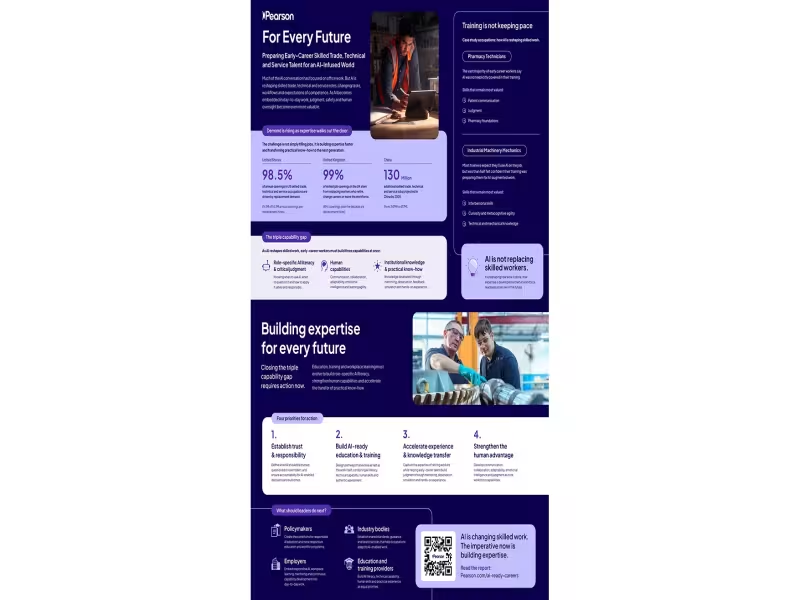
Shanghai – September 24, 2026 -- Pearson has warned that early-career workers in skilled trade, technical and service occupations are entering the workforce without the AI literacy, human skills and hands-on experience employers now require simultaneously. The findings come from a new report, "For Every Future: Preparing Early-Career Skilled Trade, Technical and Service Talent for an AI-Infused World," launched at the WorldSkills International Conference 2026 in Shanghai.
Report identifies a 'triple capability gap' hitting hospitals, factories and infrastructure
Pearson's analysis, which combines labour market and AI exposure data from the US, UK and China with employer surveys, interviews and roundtables, finds that AI is reshaping skilled occupations faster than education and training systems can adapt. Simultaneously, experienced workers are retiring and taking decades of practical knowledge with them, leaving new entrants at risk of being "AI-rich but experience-poor."
Replacement demand dominates skilled job openings in the US and UK
The report finds 99% of skilled job openings in the UK and 98.5% in the US stem from workers retiring, changing careers or leaving the workforce rather than from job growth. Fewer than half of industrial machinery mechanics surveyed said their training is preparing them for AI-enabled work, while one UK pharmacy industry participant told researchers it takes two to three years to revise pharmacy technician education standards.
Accuracy stakes remain high as AI enters safety-critical roles
Among surveyed pharmacy technicians, 98% rated exactness and accuracy as extremely important to their work, and 44% rated the consequences of error as extremely serious. Pearson cautions that without faster development of role-specific AI judgment, durable human skills and mentored practical experience, employers risk safety lapses and disruption to essential services.
Pearson calls for redesigned training pathways combining AI literacy and mentorship
Sharon Hague, President of English Language Learning and UK CEO at Pearson, said workers who keep hospitals, factories and critical infrastructure running now need three things at once: judgment to work safely with AI, human skills technology cannot replace, and hands-on expertise traditionally learned from experienced colleagues. She said rising demand for these workers, combined with retiring experts, will widen the gap between employer needs and worker capability unless training systems change. The report recommends embedding AI literacy, critical judgment and human capabilities into education and workplace learning, alongside expanded mentoring, simulation and hands-on experience to transfer institutional knowledge before it is lost.