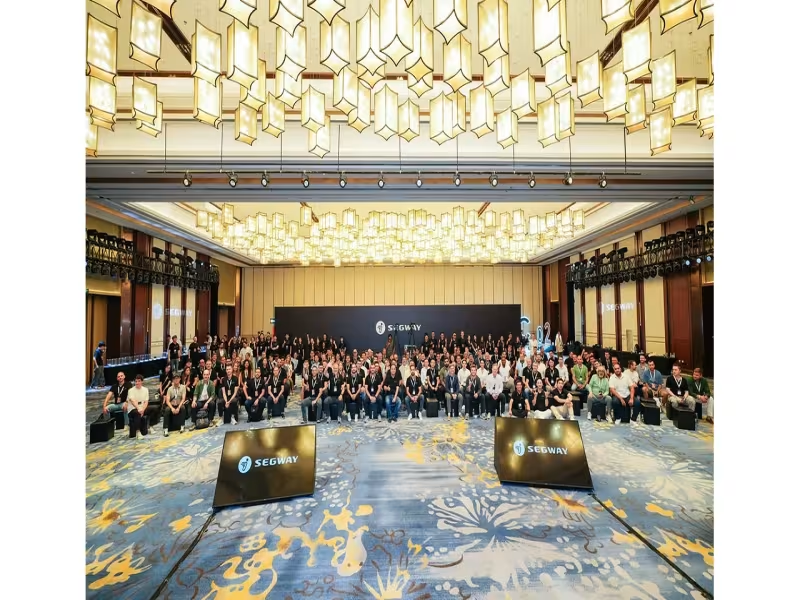
Changzhou – September 24, 2026 -- Segway gathered more than 160 guests, including representatives from over 60 shared mobility operators, at its Changzhou facility this month to unveil new hardware and a fleet-economics framework aimed at shifting the shared micromobility industry from fleet-size growth toward profitability.
Segway launches third-generation R1 e-scooter and C Series e-bikes
The company introduced the R1, its third-generation shared e-scooter, alongside new C Series shared e-bikes including the C100 and C200. The R1 features a modular architecture, integrated IoT, improved positioning and rider-assistance technologies, while the C Series applies a comparable platform approach with greater component commonality and maintenance-focused design. Segway also presented the F100, an e-bike built for delivery applications as it expands into first- and last-mile logistics use cases.
New platforms built around operators, riders and government stakeholders
Segway designed the products around what it terms OCG -- Operators, Consumers and Government. For operators, the priority is uptime, serviceability and operating efficiency; for riders, safety and ease of use; for cities, accurate positioning and responsible fleet management.
TCO framework reframes fleet economics beyond purchase price
A central theme of the event was Segway's Total Cost of Ownership (TCO) framework, which evaluates fleet economics through revenue generation, operating expenditure and capital investment rather than vehicle price alone. The model accounts for vehicle availability, maintenance, energy use and asset life as drivers of long-term fleet returns. "TCO is never just about building a cheaper vehicle. It's about designing fleets that deliver stronger returns year over year," said Alan Zhao, General Manager of Segway-Ninebot Commercial Mobility Business Division.
Segway expands from hardware supplier to service and lifecycle partner
Cid Wang, CEO and Co-Founder of Segway, said the company now provides services and solutions beyond products to help operators run fleets more efficiently. The event combined factory visits, product launches, test rides and operational discussions with more than 60 shared mobility operators and industry and media representatives.