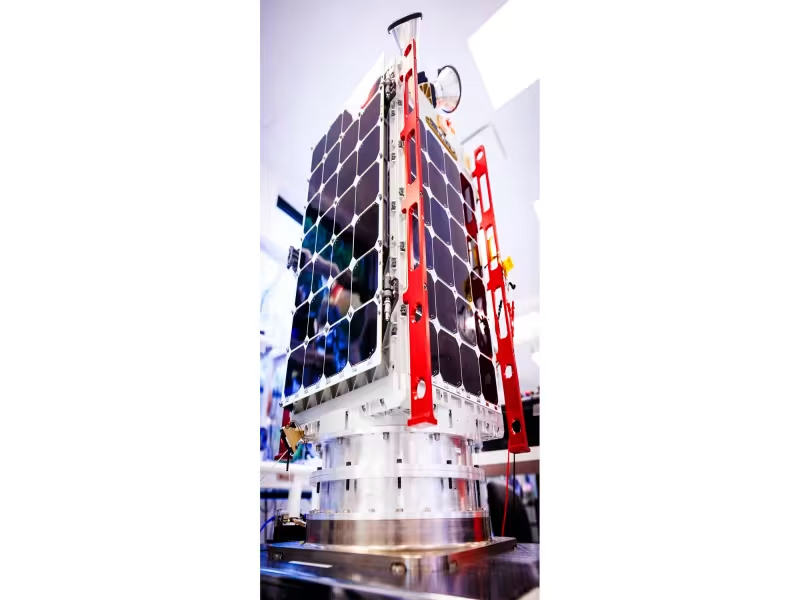
Vandenberg Space Force Base, Calif. – September 28, 2026 -- Star Catcher Industries has its Protostar power node ready for launch aboard SpaceX's Transporter-18 mission, scheduled for October 2026, in an attempt to complete the first optical power beaming demonstration between two untethered spacecraft.
Protostar targets a power beaming feat never before achieved in orbit
Following launch and commissioning, Protostar will deploy and track a CubeSat, beaming measurable power to off-the-shelf solar panels on the target spacecraft. Success would mark the world's first optical power transfer between two free-flying spacecraft, validating the core technology stack Star Catcher intends to scale into a commercial orbital power grid: energy harvesting, satellite acquisition and tracking, and energy transmission.
Company built and shipped a space-qualified prototype within two years of founding
Star Catcher, founded in 2024, previously set a world record for optical power beaming in terrestrial tests at NASA's Kennedy Space Center and completed an on-orbit tracking demonstration called Sextant Alpha in late 2025. Data from those tests fed directly into Protostar's accelerated development timeline. Co-founder and CTO Michael Snyder said the mission will generate operational data under real orbital conditions to support the company's planned commercial power grid.
Ten commercial power purchase agreements back the orbital grid strategy
Star Catcher has signed ten publicly disclosed Power Purchase Agreements with space companies including Starcloud, Loft Orbital, Astro Digital and Aethero, alongside more than 40 Letters of Intent. The company has also secured a $60 million Strategic Funding Increase award from the U.S. Space Force and raised $88 million in venture capital to date.
Follow-on satellite and 100,000-square-foot headquarters are already in development
Star Catcher has started work on a follow-on satellite designed to beam operational levels of orbital power and is building a new 100,000-square-foot headquarters in Jacksonville, Florida. The company is also recruiting to more than double its current team size. Co-founder and CEO Andrew Rush said power constraints currently limit applications ranging from national security intelligence to AI-powered orbital computing and Earth observation.