Product Launch

CIQ: Linux 6.18 Loads AI Model Weights 33.8% Faster

Image
CIQ: Linux 6.18 Loads AI Model Weights 33.8% Faster

Santa Clara – October 12, 2026 -- CIQ says model loading ran 33.8 percent faster on Linux 6.18 than on a kernel frozen at general availability, based on its own benchmarks of the same workload. The company is pitching the result for RLC Pro AI, its Enterprise Linux distribution for GPU infrastructure.

CIQ's argument is that AI hardware and frameworks move faster than the operating system beneath them. NVIDIA advances the hardware, CUDA the toolkit and PyTorch the framework. An enterprise kernel, by design, trails by an average of twelve to eighteen months. RLC Pro AI ships Linux 6.18, the latest production and long-term GPU drivers, and the CUDA toolkit together, validated as one stack.
CIQ Fuzzball 4.2 Lets AI Agents Run HPC Workflows Under Admin Control

Image
CIQ Fuzzball 4.2 Lets AI Agents Run HPC Workflows Under Admin Control

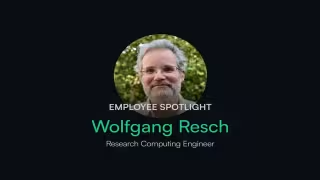
United States – October 12, 2026 -- CIQ's Fuzzball 4.2 allows AI agents to interact with the HPC platform within permissions set by the customer organization, and lets workflows submit and manage other workflows. Research Computing Engineer Wolfgang Resch, who spent roughly a decade supporting researchers at the NIH High Performance Computing facility, says the agent access will lower the barrier to entry for new users and speed development of Fuzzball workflows.

Fuzzball 4.2 adds agent access and workflow-to-workflow submission

Resch sees opportunities to fold Fuzzball into existing agentic workflows and to help administrators investigate cluster issues. Workflows that launch other workflows enable more complex applications and simplify integration with workflow engines such as Nextflow.

CIQ's RLC Pro AI Image Cuts Sovereign AI Setup to Three Steps

Image
CIQ's RLC Pro AI Image Cuts Sovereign AI Setup to Three Steps

Global – October 12, 2026 -- RLC Pro AI (Rocky Linux from CIQ) now ships as a container image bundling GPU drivers, system dependencies and inference backend software, reducing a sovereign AI deployment to three steps, according to guest author Zach Deane-Mayer of AI Insight Solutions.

The pitch targets dependence on frontier AI labs. Those labs sell turnkey AI priced by the token, set the deprecation schedule and can revoke customer access at any time. Deane-Mayer argues that businesses reliant on AI should own the stack it runs on.

Fuzzball v4.3 Ships 11 Preset LLMs for Self-Hosted GPU Serving

Image
Fuzzball v4.3 Ships 11 Preset LLMs for Self-Hosted GPU Serving

Global – – October 12, 2026 -- Fuzzball v4.3 adds a vLLM catalog entry and eleven validated model presets that serve a large language model from a pool of replicas on NVIDIA or AMD GPUs, behind an OpenAI-compatible endpoint.

Eleven presets come with GPU count, context size and vLLM arguments already set

The generic vLLM entry serves a HuggingFace model from a single catalog command. The eleven presets cover GPT-OSS 20B and 120B, Ministral 3 8B and 14B, Qwen3-Coder 30B and Next 80B, Nemotron 3 Nano and Super, Mistral Medium 3.5, Llama 4 Scout and Gemma 4 31B. Each has its GPU fit and serving arguments validated per model.

Users can accept the preset values or override them. In one example, a persistent volume keeps the downloaded checkpoint between starts, and MaxReplicas is raised to eight so the pool can grow under load.

CIQ Bundles Enterprise Linux Manager Free With RLC Pro Subscriptions

Image
CIQ Bundles Enterprise Linux Manager Free With RLC Pro Subscriptions

Global – October 12, 2026 -- CIQ is providing its Enterprise Linux Manager (ELM) at no additional charge to all RLC Pro subscriptions, giving fleet operators control over when packages reach production hosts.

ELM mirrors upstream repositories onto customer-owned storage

The tool sits between package sources and the hosts that install them. It mirrors upstream repositories onto infrastructure the customer already operates, whether connected or not, so hosts pull from that mirror rather than repeatedly querying off-site lists.

CIQ targets four weak points in the legacy Enterprise Linux model at fleet scale: vendor-wide curation that is not tailored to the customer, every host checking the same external list on its own, manual staging between dev and production, and custom RPMs that sit outside the curated repository and need hand-managed updates.

CIQ Fuzzball 4.3 Launches Private LLM Inference in a Few Clicks

Image
CIQ Fuzzball 4.3 Launches Private LLM Inference in a Few Clicks

United States – October 12, 2026 -- CIQ's Fuzzball 4.3 lets users launch large language models for inference in a few clicks, drawing on a catalog of nearly a dozen preconfigured LLMs that can run on an organization's own HPC cluster or in the cloud.

Fuzzball 4.3 removes manual setup for LLM serving

Users pick a model from the workflow catalog and interact with it through a browser or command line client. Fuzzball scales model services up or down with demand and provides a durable endpoint for access.

Earlier versions required more work for any model missing from the catalog. Users had to write a Fuzzfile, determine the model's compute requirements, sometimes by trial and error, and find a way to reach an autoscaled node pool without a single endpoint. Version 4.3 removes most of those steps.

S-Docs Adds CAC/PIV Smart Card Signing Ahead of Dreamforce 2025

New York City – October 12, 2026 -- S-Docs, a native document generation and e-signature provider for Salesforce, has made new Microsoft file format support and government smart card identity verification available to customers immediately, ahead of Dreamforce 2025.

S-Sign adds CAC and PIV smart card authentication for regulated signers

E-signature flows in S-Sign now let signers authenticate with government-issued Common Access Card (CAC) or Personal Identity Verification (PIV) smart cards. Multi-signer workflows can be configured to require CAC/PIV verification, PIN authentication, or no authentication where appropriate. Each signature is backed by a verified record of verification and signing events, creating an audit trail.

S-Docs Adds CAC and PIV Authenticated Signing to Salesforce S-Sign

New York City – October 12, 2026 -- S-Docs, a 100% Salesforce-native document automation vendor, has added Common Access Card (CAC) and Personal Identity Verification (PIV) authenticated signing to its S-Sign e-Signature product, letting agencies and contractors verify signer identity inside Salesforce workflows.

S-Sign verifies signer identity at the moment of document execution

The enhancement uses the signer's existing identity provider. Agencies and contractors insert their CAC or PIV cards to authenticate, without replacing or reworking established systems. S-Docs describes the product as fully standards-based and identity-provider-agnostic.

S-Docs says the enhanced S-Sign runs entirely within Salesforce and requires no extra clicks or downloads. It meets DoD and federal requirements guided by NIST and FIPS standards and keeps a complete audit trail for compliance and record-keeping.

S-Docs Adds AI Template Agent and Built-In e-Signature to Salesforce

New York City – October 12, 2026 -- S-Docs, a document automation and e-Signature provider for Salesforce, has expanded its platform to let regulated enterprises build templates without code, collect signatures in the same workflow as document generation, and let AI assistants initiate document requests under Salesforce governance.

The launch targets a governance gap the company cites: 72% of regulated organizations have deployed AI in at least one document workflow, but only 30% have the governance to do so safely.

Visual Template Editor removes the admin and developer bottleneck

The new Visual Template Editor lets business users design documents on a page, see changes live, and add Salesforce data and conditional logic without writing code. Template creation previously required an admin or a developer. S-Docs says any trained team member can now do it, shortening the time to launch or update a document.

Noah Medical Launches Galaxy II Bronchoscopy Software With Dual-Mode Imaging

Image
Noah Medical Launches Galaxy II Bronchoscopy Software With Dual-Mode Imaging

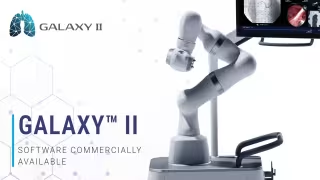
San Jose – October 12, 2026 -- Noah Medical has commercially launched Galaxy II software for its robotic-assisted bronchoscopy (RAB) platform, adding Dual-Mode Imaging that lets physicians switch between High-Definition Digital Tomosynthesis (HD-DT) and Cone-Beam CT (CBCT) at any point in a procedure. The company says the update requires no added capital, complexity, or radiation.

Dual-Mode Imaging gives physicians a choice between HD-DT and CBCT mid-procedure

HD-DT covers the vast majority of cases, and CBCT is available within the same platform when a case demands it. Based on published literature, HD-DT provides effective imaging for most cases at up to 10 times lower radiation dose than CBCT. Physicians can reserve CBCT for cases that need it, which limits radiation exposure for patients and staff.