Clinical Trial Results

Epicyt Pharma's BAFA Cuts Urinary Calcium Loss in Bypass Patients

Gothenburg – – September 11, 2026 -- Epicyt Pharma AB reported positive topline results from a Phase 1/2a first-in-human study of its oral drug candidate BAFA, showing a statistically significant reduction in urinary calcium excretion in patients who underwent Roux-en-Y gastric bypass (RYGB) surgery. The Gothenburg-based clinical-stage biopharmaceutical company said the trial, completed in March 2026, also recorded improvements in key biomarkers of calcium homeostasis, consistent with enhanced intestinal calcium uptake.

BAFA targets a market of 3.5 million patients across the EU and US

Epicyt estimates that approximately 3.5 million people in the EU and US currently live with impaired calcium homeostasis following bariatric surgery, with roughly 250,000 new patients added annually. RYGB is widely used to treat severe obesity but frequently impairs calcium uptake, raising the risk of secondary hyperparathyroidism, reduced bone density and fractures.
Six Proteomic Clocks Confirm Insilico's AI Drug Reverses Biological Age

Cambridge, Massachusetts – September 10, 2026 -- Insilico Medicine has published data in Nature Biotechnology showing that its AI-designed idiopathic pulmonary fibrosis (IPF) candidate rentosertib reversed predicted biological age by up to six years in some patients, based on six independently developed proteomic aging clocks.

Sky Labs' CART Ring Shows 80% Data Accuracy in AFib, Heart Failure Trials

Image
Sky Labs' CART Ring Shows 80% Data Accuracy in AFib, Heart Failure Trials

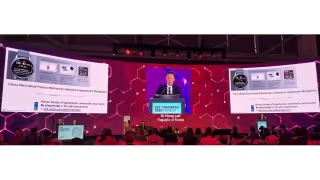
Munich – September 10, 2026 -- Sky Labs presented new clinical trial data for its ring-based blood pressure monitor, CART, at the ESC Congress 2026 in Munich on September 7, showing an 80% data evaluability rate in continuous monitoring of atrial fibrillation (AFib) patients and high correlation with standard ambulatory blood pressure monitoring (ABPM) in severe heart failure cases.

CART achieves 80% evaluability rate in 24-hour monitoring of atrial fibrillation patients

Professor Ki-Hong Lee of Chonnam National University Hospital reported that CART's ring-based 24-hour monitoring achieved approximately 80% data evaluability in AFib patients, enabling continuous tracking of nocturnal blood pressure dipping patterns that irregular pulse rates typically disrupt for cuff-based devices.

Akeso's Ivonescimab Beats Pembrolizumab on Survival in Phase III NSCLC Trial

Hong Kong – September 08, 2026 -- Akeso, Inc. (9926.HK) said its bispecific antibody ivonescimab produced a statistically significant and clinically meaningful overall survival benefit versus Merck's pembrolizumab in a pre-specified interim analysis of the Phase III HARMONi-2 trial, as assessed by an Independent Data Monitoring Committee.

Ivonescimab clears key secondary survival endpoint against Keytruda

The HARMONi-2 (AK112-303) study is a randomized, double-blind, multicenter registrational trial testing ivonescimab against pembrolizumab as first-line therapy in patients with locally advanced or metastatic non-small cell lung cancer (NSCLC) whose tumors express PD-L1 at a TPS of 1% or higher. Detailed interim overall survival data will be presented at an upcoming international medical conference and published in a peer-reviewed journal.

RZL-012 Hits All Phase 3 Endpoints, Clears Path to China NDA Filing

Hod Hasharon, Israel & Shanghai – September 08, 2026 -- Raziel Therapeutics and Fosun Pharma reported that RZL-012, an injectable lipolytic drug for submental fat reduction, met every primary and secondary endpoint in a 480-patient Phase 3 trial in China, with the primary responder rate outperforming placebo by 30 percentage points after a single treatment cycle.

Pivotal China trial clears statistical bar with wide margin over placebo

The registration study, conducted with Fosun Pharma affiliate JuveStar, enrolled 360 patients on active treatment and 120 on placebo, evaluating efficacy 84 days after one treatment cycle. Results showed a decisive statistical advantage across all measured endpoints, according to the companies.

Amgen's Repatha Cuts Death Risk 20% in High-Risk Heart Trial

Image
Amgen's Repatha Cuts Death Risk 20% in High-Risk Heart Trial

MUNICH, Germany -- September 02, 2026 -- Amgen's Repatha (evolocumab) reduced all-cause mortality by 20% in high-risk patients who had never suffered a heart attack or stroke, according to a pre-specified analysis of the Phase 3 VESALIUS-CV trial presented at the European Society of Cardiology Congress 2026 and published simultaneously in Circulation.

Trial data show mortality benefit emerging after 18 months of treatment
The analysis tracked more than 12,000 high-risk adults over a median of 4.6 years. Both overall deaths and cardiovascular deaths declined in the Repatha arm, with the survival curve separating at approximately 1.5 years and widening through follow-up. Amgen positions this as the first Phase 3 evidence that a PCSK9 inhibitor lowers all-cause mortality in a primary-prevention population.

Amgen's Repatha Cuts Death Risk 20% in High-Risk Prevention Trial

Image
Amgen's Repatha Cuts Death Risk 20% in High-Risk Prevention Trial

THOUSAND OAKS, Calif. -- September 01, 2026 -- Amgen said its cholesterol drug Repatha reduced the risk of death by 20% among more than 12,000 high-risk adults who had not yet suffered a heart attack or stroke, based on a pre-specified analysis of the Phase 3 VESALIUS-CV trial. The company presented the data in a late-breaking session at the European Society of Cardiology Congress 2026 in Munich, Germany, and published the findings simultaneously in Circulation. Amgen said the result marks the first time a PCSK9 inhibitor has shown a reduction in all-cause mortality among primary prevention patients in a Phase 3 study.

Roche's Divarasib Beats Approved KRAS G12C Drugs in Head-to-Head Lung Cancer Trial

Image
Roche's Divarasib Beats Approved KRAS G12C Drugs in Head-to-Head Lung Cancer Trial

SHERIDAN, WYOMING -- July 08, 2026 -- Roche announced positive results from the phase III Krascendo 1 study, showing that its investigational KRAS G12C inhibitor divarasib outperformed the approved first-generation inhibitors sotorasib and adagrasib in patients with previously treated KRAS G12C non-small cell lung cancer. The study met both its primary and key secondary endpoints, with divarasib delivering statistically significant improvements in progression-free survival and overall survival. Roche plans to submit the data to health authorities and present full results at an upcoming medical meeting. The company positions the results as evidence that divarasib could become a new treatment standard for this genetically defined subgroup of lung cancer patients.