UNITED STATES -- November 24, 2026 -- Three federal departments announced on October 16 a ban on unauthorized drone operations within one nautical mile north of the U.S.-Mexico border, from the ground up to 400 feet. The Departments of Transportation, War and Homeland Security coordinated the border drone ban.
U.S. Customs and Border Protection reported more than 42,000 near-border drone flights in fiscal 2025, while cautioning that not all were necessarily malicious. That works out to about 115 flights a day, by our calculation, over a 365-day year.
AV engineer says enforcement, not the flight restriction, decides the outcome
Aaron Westman, an AV engineer specializing in counter-drone and directed-energy systems, argues that flight restrictions have limited effect on criminal organizations because compliance is not their strength. In his commentary, he says military officials have described drones being used for reconnaissance in support of smuggling and human trafficking.
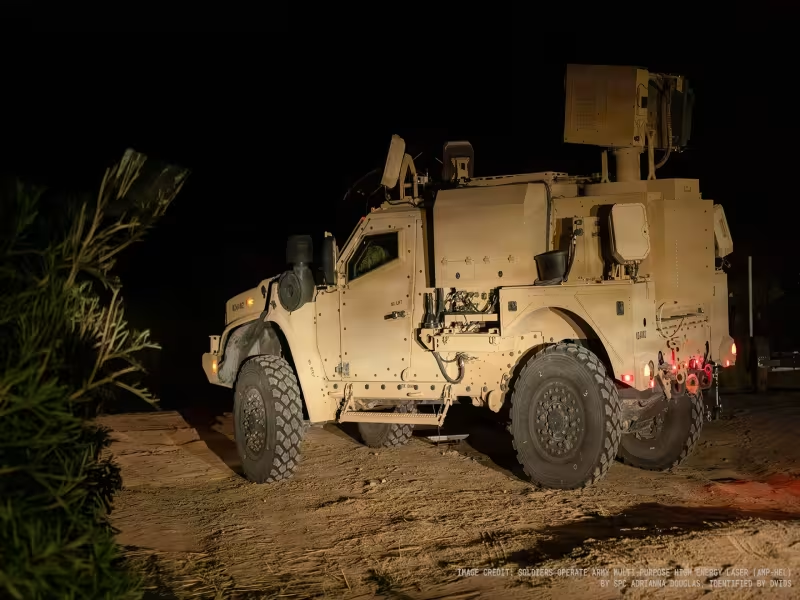
AV supplies its LOCUST laser technology to the Army's Multi-Purpose High Energy Laser program, known as AMP-HEL. The company has delivered these vehicle-mounted systems to the Army on light tactical vehicles. AV did not disclose how many systems it has delivered or what a single engagement costs.
Westman says lasers offer a potentially low cost per engagement because the energy used can cost far less than an expendable interceptor. He adds that the electricity bill is not the cost of the defense: the systems still need power, cooling, maintenance and trained operators.
For border and critical-facility customers, he says the test is whether incursions fall in the defended area and whether operators change routes, not how many drones are destroyed. He warns against mistaking displacement for deterrence.
Westman says scaling up will require more systems, trained operators and sustained cooperation among security and aviation-safety agencies. Industry will need to expand production, he says, and government will need to provide consistent demand.