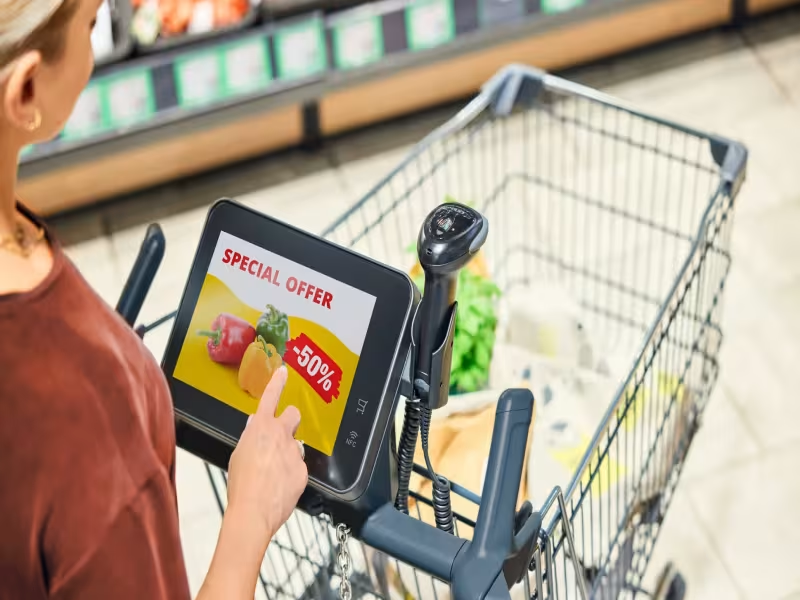
SHERIDAN, WYOMING - February 23, 2026 - Wanzl GmbH & Co. KGaA is presenting its FastLaner® smart shopping trolley and HybridLoc digital lock at EuroShop 2026 as a practical route to digitize in-store processes without forcing customers into entirely new shopping habits. The concept links physical equipment to digital workflows: shoppers scan items at the trolley and can pay at a staffed checkout, self-checkout, or directly via app or card. For retailers, the promise is a smoother customer journey, reduced queue friction, and better process visibility-while keeping day-to-day trolley collection and return routines largely unchanged.
What Wanzl is bringing to EuroShop 2026
Wanzl positions FastLaner® and HybridLoc as "smart modules" that fit into existing store routines. Instead of treating the trolley as passive transport equipment, the setup turns it into an active part of the checkout and store-process chain.
Operationally, the system aims to address common retail constraints highlighted in the source: cost pressure, staffing shortages, and the need for transparency across the customer journey. The trolley becomes both a scanning device and a guided pathway to multiple payment options, while the lock becomes a starting point for digital engagement.
Checkout flexibility without rebuilding the entire flow
FastLaner® supports item scanning directly at the trolley, followed by multiple payment choices:
- Paying at a traditional checkout
- Paying at a self-checkout
- Paying directly via app or credit card
For operators, the key implementation point is integration: the system-open architecture is described as enabling cooperation with common cash register software providers, which is intended to simplify adoption within existing IT landscapes. The operational objective is clear: reduce repacking and queuing for customers, while streamlining processes and lowering strain on employees.
HybridLoc as the "entry gate" into digital services
HybridLoc adds a dual-mode lock approach. Customers can unlock the trolley traditionally with a coin or digitally via smartphone using the operator app. In business terms, Wanzl frames this as a low-threshold onramp to digital services: retailers can encourage app downloads, increase interaction opportunities, and create new routes for data generation-starting at the moment the customer takes a trolley.
That matters for retailers that want to expand digital touchpoints without requiring customers to change core shopping behavior. The lock becomes a controlled "first step" that can remain optional for shoppers while still supporting digital adoption targets.
Charging and daily operations: reducing friction for staff
A frequent failure point for smart hardware programs is operational overhead. Wanzl's source text emphasizes charge management designed to be invisible to routine store work. Charging starts as soon as the trolley is placed in the station, with contacts attached at the side of the trolley handle.
The implied operational benefit is lower process disruption: customers collect and return trolleys as usual, and the store does not need a separate "special handling" routine for charging cycles in everyday operations.
Retail media and process control built into the trolley
The FastLaner® includes an integrated display that retailers can use to address customers in a situational way during the shopping trip, positioning the trolley as a retail media touchpoint.
On the control and loss-prevention side, the source highlights new security and analytics capabilities:
- AI-powered product recognition to record the number of scanned items in the basket
- Support for goods security and process control
This is presented as an operational layer that benefits both retailers and customers by adding a verification mechanism around scanned-item behavior-without describing specific enforcement models or KPIs.
wanzl connect as the backend layer for scaling
Wanzl states that processes are centrally controlled via the cloud-based platform wanzl connect®. As a backend enabler, it consolidates real-time data and supports combining modules such as:
- Trolley tracking
- Gate monitoring
- RFID analysis
The operational goal is transparency across usage, capacity, and processes, turning one touchpoint (the trolley) into a scalable system. For multi-store operators, the strategic value is less about a single device and more about whether the platform can standardize deployment, monitoring, and optimization across locations.