GPS Jamming Hits 124,235 Vessels, Undermining Marine Insurance Claims

Image
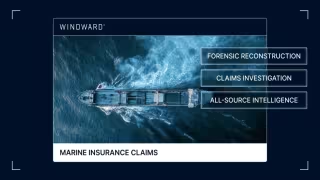
GPS Jamming Hits 124,235 Vessels, Undermining Marine Insurance Claims

Middle East – October 29, 2026 -- GPS jamming affected 124,235 vessels worldwide in the third quarter of 2026, according to Windward's Q3 Maritime Risk Report. The AIS records marine insurers have long used to settle pay-or-reject decisions are no longer a reliable basis for loss investigation in the highest-risk regions.

Jamming runs at 5,131 incidents a day and has produced 3.35 million false meetings

Jamming averaged 5,131 incidents per day across the quarter, broadly unchanged from Q2. Since Operation Epic Fury began in February 2026, Windward has recorded more than 3.35 million false ship-to-ship meetings, in which injected coordinates made vessels appear to rendezvous when no meeting took place.
Customs Agencies Need Maritime Intelligence, Not Trade Data, Windward Says

Image
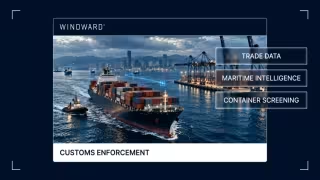
Customs Agencies Need Maritime Intelligence, Not Trade Data, Windward Says

Global – October 29, 2026 -- Declaration-based trade data cannot identify the vessels customs agencies most need to stop, according to a Windward analysis that points to a UK cocaine seizure worth roughly $100 million at London Gateway as proof.

Trade data records declarations, and enforcement targets the ones that fail

Cargo manifests, customs declarations and import and export filings were built to answer commercial questions, such as crude volumes through Yanbu or dry bulk flows into Rotterdam. Enforcement asks different questions. Which of 15,000 containers arriving at a port in one day holds something undeclared? Which vessel detoured through a sanctioned port?

Windward argues the gap is structural, not a matter of coverage or refresh rate. A vessel running dark leaves no AIS record to check, and one broadcasting manipulated positions leaves a record that looks complete.

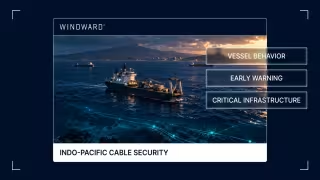
Pacific Cable Risk Hinges on Vessel Behavior, Windward Data Shows

Image
Pacific Cable Risk Hinges on Vessel Behavior, Windward Data Shows

Honolulu – October 29, 2026 -- Windward recorded 27 slow-speed service and research vessel events near cable routes around Hawaii and 5 around Guam and the Northern Marianas in Q1 2026, as concentrated landing sites and a thin repair fleet leave Indo-Pacific cable security dependent on early warning.

Hawaii and Guam concentrate trans-Pacific cable exposure

Both islands anchor the trans-Pacific links connecting the continental U.S. to forces, allies and partners in the theater. A September 2026 report for the U.S.-China Economic and Security Review Commission (USCC) found that the continental U.S. connections to Hawaii and Guam are particularly vulnerable to gray-zone sabotage, with few redundancy options.

Windward Tracks Vessels Loitering Over Subsea Cables in Five Theaters

Image
Windward Tracks Vessels Loitering Over Subsea Cables in Five Theaters

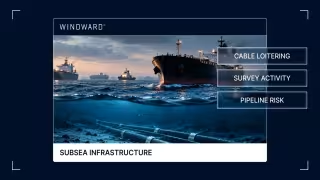
Guam – October 29, 2026 -- Windward data shows vessels linked to China and Russia loitering over subsea cable and pipeline corridors in five theaters. Activity ranges from the Guam cable hub to the Luzon Strait, Bab el-Mandeb and the gas pipelines feeding St Fergus, which supplies 25 to 50% of Britain's gas.

Chinese survey grids cover the Guam and Japan cable corridors

A Chinese-flagged fishery patrol vessel run by a state fishery research institute has worked research-pattern grids on both sides of Guam for seven weeks. Guam is the landing point for 11 subsea cables. The vessel ran a grid east of Guam between the Bulikula and SEA-US cables from August 31 to around September 20. A second grid west of Guam in the Philippine Sea was still running on September 29.

Windward Links 45 Shadow Fleet Tankers to One Hong Kong Nominee

Image
Windward Links 45 Shadow Fleet Tankers to One Hong Kong Nominee

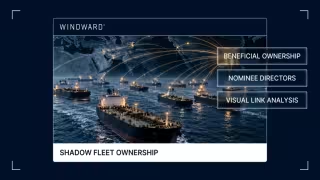
Hong Kong – October 29, 2026 -- Windward has tied 45 Russia-trading shadow fleet tankers, held through 45 single-ship Hong Kong companies, to one untraceable nominee director, and 42 of the vessels are sanctioned.

Per Windward's visual link analysis, all but three of the tankers share 19 ISM managers with addresses in one industrial cluster in Sumqayit, Azerbaijan. The three exceptions are the unsanctioned vessels, which use ISM managers in the UAE.

Aging fleet runs under two flags

The group comprises six Suezmaxes, 33 Aframaxes and six medium-range product tankers, with an average age of 22 years. Thirty-four fly the Sierra Leone flag and nine fly the Equatorial Guinea flag.

TransCore Launches Open-Road Tolling at DRJTBC's New Hope Bridge

Image
TransCore Launches Open-Road Tolling at DRJTBC's New Hope Bridge

Nashville – October 29, 2026 -- TransCore has launched open-road all-electronic tolling (AET) at the New Hope-Lambertville Toll Bridge (U.S. Route 202), the first of the Delaware River Joint Toll Bridge Commission's (DRJTBC) seven legacy toll bridges to complete the conversion.

Toll plaza infrastructure is eliminated at the crossing

The system replaces cashless tolling run through existing toll plaza infrastructure with full open-road AET. Motorists now pass through the crossing without stopping. TransCore says this improves roadway safety and cuts long-term maintenance requirements.

Historians Dropping OPC UA StatusCodes Risk Skewed Process Data

Image
Historians Dropping OPC UA StatusCodes Risk Skewed Process Data

Global – October 29, 2026 -- Industrial historians that store an OPC UA value and timestamp without the accompanying 32-bit StatusCode can pass stale, substituted, or Bad readings into averages, alarm reviews, and production calculations as ordinary process measurements.

StatusCode carries more than a Good, Bad, or Uncertain label

Every OPC UA DataValue can contain a value, timestamps, and a StatusCode. The severity class is Good, Uncertain, or Bad. The remaining bits can carry a specific subcode and information bits, such as monitored-item queue overflow, limit state, or changed semantics.

The SemanticsChanged bit can indicate that metadata such as engineering units changed and should be re-read before processing. A value of 100 is not comparable with the previous day's 100 if the unit or scale changed in between.

Reconnected OPC UA Links Can Still Leave Historian Data Gaps

Image
Reconnected OPC UA Links Can Still Leave Historian Data Gaps

Global – October 29, 2026 -- A restored OPC UA connection does not guarantee that the historian holds every value generated during an outage, because the three links in the data path (source, collector and historian) each lose data in different ways. Buffering at one layer cannot repair a loss that occurred earlier in the chain.

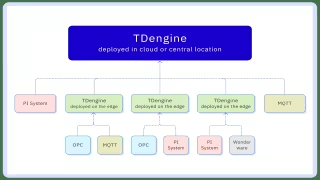
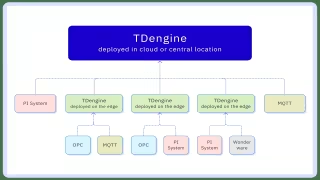
In the common architecture of device or PLC, OPC UA server, collector and historian, the first step is to find which link failed. If the device or server stops producing values, the collector has nothing to recover unless the source keeps its own history. If the collector cannot reach the historian, a durable local buffer can protect messages it has already collected. Treating all three as a generic network outage leads to the wrong fix.

OPC UA Historians Should Store Source Time and Receipt Time

Image
OPC UA Historians Should Store Source Time and Receipt Time

Global – October 29, 2026 -- Choosing the wrong OPC UA timestamp can reorder events, hide network delay or place valid data outside the historian query window, so most process analysis should use a trustworthy SourceTimestamp as event time and keep collector receipt time as a separate field.

SourceTimestamp stays fixed as data passes through servers

The OPC UA specification defines SourceTimestamp as the time a data source applies to a value, ideally the last change of the value or status, generated as close to the source as possible. It does not change when the value passes through another OPC UA server. That makes it the best fit for sequence-of-events work, batch analysis and calculations tied to when the process changed.

TDengine Maps Three OPC UA Collection Modes to Historian Needs

Image
TDengine Maps Three OPC UA Collection Modes to Historian Needs

Global – October 29, 2026 -- Industrial historians should default to data-change subscriptions for continuously monitored OPC UA process variables and reserve polling for explicitly periodic records, according to collection guidance tied to TDengine TSDB-Enterprise.

Polling leaves a blind spot between reads

A polling client issues Read requests at a fixed interval, so a ten-second poll fetches the latest value every ten seconds whether or not it changed. If a motor status flips from 0 to 1 and back to 0 inside that window, both surrounding polls return 0. A shorter interval cuts the risk but raises load, and it never removes the gap between samples.

Polling fits periodic reporting, slow-changing values that need regular records, and servers with weak subscription support. A quality report requiring one temperature record per minute, including unchanged periods, is a polling case.