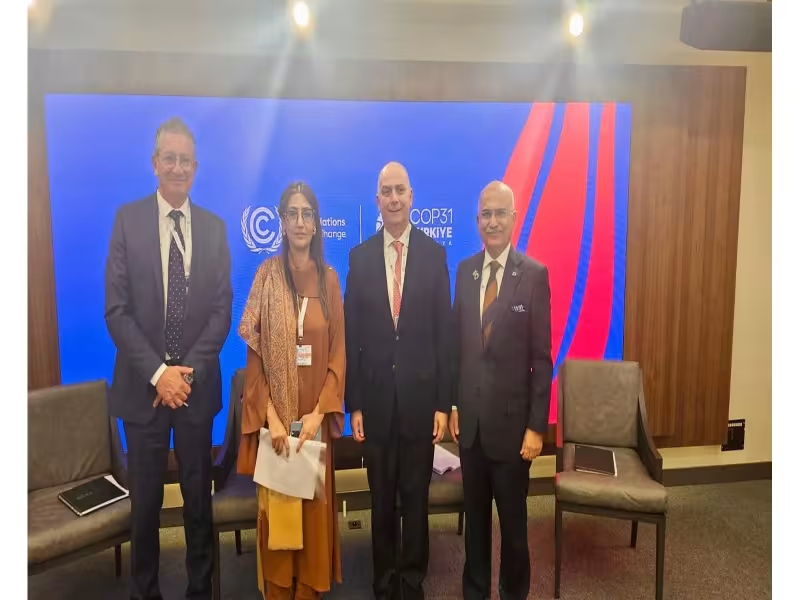
ANTALYA – November 12, 2026 -- Scope 3 value-chain emissions account for 99% of Beko's total emissions, and more than 80% of those come from products in use in people's homes, CEO Can Dinçer told COP31 delegates while arguing that appliance efficiency is the company's biggest lever for cutting emissions.
Dinçer spoke on the panel 'From Efficiency to Resilience: The Role of the Home-Appliance Industry in the Energy Transition' at the pavilion of Beko's parent, Koç Holding. He said the energy transition must electrify smarter as well as faster, and that much of that work happens in the home.
IEA data shows electricity demand rising and wholesale prices climbing
Global electricity demand grew 3% in 2025 and is forecast to rise 3.6% in 2026, according to the International Energy Agency's Electricity Mid-Year Update. Drivers include rising appliance ownership, air conditioning and heat pumps, alongside industrial growth, electric vehicles and data centres.
The same report puts average spot wholesale electricity prices in the European Union more than 30% higher year on year in the second quarter of 2026.
Türkiye's '35 by 35' pledge targets a 35% electricity share by 2035
The COP31 Presidency's Global Electrification Pledge aims to lift electricity's share of global final energy consumption from just over 20% to 35% by 2035. It runs alongside the COP28 commitment to double the global average annual rate of energy efficiency improvements by 2030.
Buildings account for more than half of global electricity consumption, and electrical appliances make up 45% of the electricity used in them, per the IEA.
Dinçer ties household kilowatt-hours to grid pressure and costs
Dinçer said every kilowatt-hour saved at home can help reduce pressure on the electricity system and lowers household energy use and costs, and that efficiency is central to Beko's product design.
Panelists were Dr. Bilal Düzgün of the Turkish Ministry of Energy and Natural Resources, Paolo Falcioni of APPLiA, Dr. Mine Işık of the IEA, and Dinçer. Ana Maria Carreno of CLASP moderated.
Beko urges high-efficiency cooling in emerging markets before regulation requires it
Earlier in the day, Dinçer spoke on 'Cooling a Warming World: Energy Access and Climate Change in Emerging Markets' at the Türkiye Pavilion in the Blue Zone. Other speakers were Pakistan's Minister of State for Climate Change and Environmental Coordination, Dr Shezra Mansab Ali Khan Kharal, and Dawlance CEO Umar Ahsan Khan. Michel Frédeau of BCG moderated.
Drawing on Beko's operations with Dawlance in Pakistan and Defy in South Africa, Dinçer said cooling demand is growing fastest in markets where efficiency standards are still developing. He argued that high-efficiency products should reach those markets before regulation requires it.
Beko is attending COP31 alongside Koç Holding, the event's Global Business Partner, as part of the 'From Commitments to Action' programme at Koç's pavilion in the Green Zone.