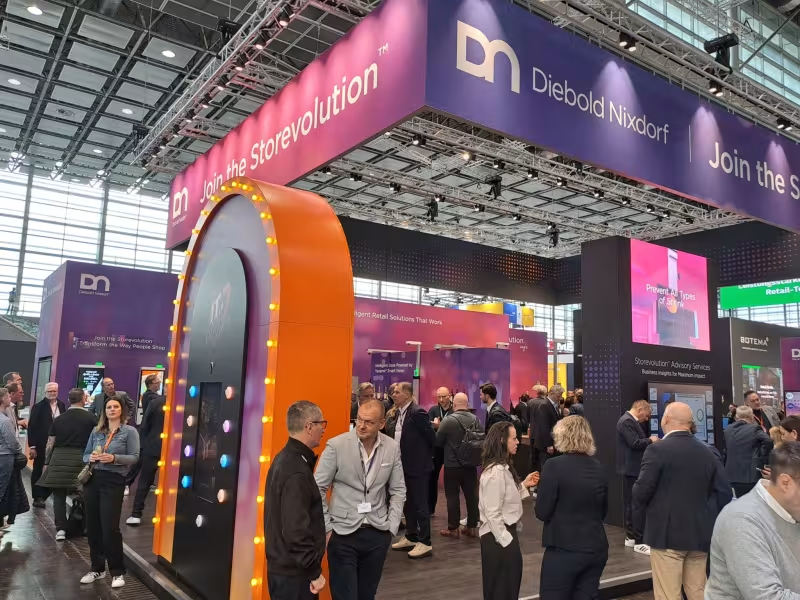
SHERIDAN, WYOMING - February 24, 2026 - Diebold Nixdorf GmbH is promoting its unified retail commerce platform, globally scalable services, and in-store technology portfolio as it prepares to meet retail decision-makers at EuroShop in Düsseldorf (Hall 6 / E62). The company is framing its value around two persistent store-floor priorities: reducing inventory shrink and removing checkout friction. Central to that positioning is visual AI at the point of interaction, combined with modular self-service concepts and advisory services designed to help retailers implement and integrate self-service without being locked into a single hardware and software vendor. For operators, the message is about improving store performance through easier integration, higher system availability, and more proactive service models.
Buyer focus: performance in physical retail, not isolated pilots
Diebold Nixdorf describes itself as a provider of a unified retail commerce platform and a globally scalable services partner for physical retail. Its stated customer footprint spans large and recognizable brands across general merchandise, grocery and hard discount, fashion and specialty, fuel and convenience, and quick-service restaurants.
In operational terms, this positioning targets the parts of the store where transformation programs often stall: checkout journeys, associate utilization, and the stability of distributed systems. Rather than emphasizing a single product, the company highlights an integrated approach that combines technology, implementation, and service coverage.
Modular self-service to avoid vendor lock-in constraints
A recurring barrier in self-service rollouts is the perceived trade-off between standardization and flexibility. Diebold Nixdorf explicitly positions its approach as making self-service checkout concepts easier to implement and integrate while avoiding lock-in to a single hardware and software vendor.
For retail organizations managing multi-year store modernization roadmaps, this claim aligns with common governance requirements: preserving procurement leverage, maintaining integration optionality, and reducing future switching costs. It also signals an emphasis on interoperability during deployment, rather than forcing a full-stack replacement.
Visual AI at the point of interaction to address shrink and friction
The company identifies the application of visual AI at the point of interaction as a key differentiator, intended to reduce loss and friction where they occur: in aisles and at checkout. It also highlights the use of sophisticated AI to tackle in-store pain points such as inventory shrink and checkout friction.
From an operator perspective, this focus maps to practical questions that determine whether AI investments become operational tools rather than "innovation theater": where the AI runs (at the interaction point), what it is meant to influence (loss and friction), and how it fits into existing store journeys without creating new bottlenecks.
Vynamic Smart Vision AI and the in-store experience mandate
Within its retail portfolio, Diebold Nixdorf presents Vynamic Smart Vision AI Solutions for Retail as part of its advanced AI offering to help retailers "transform their stores with AI technology." The company links this to enhancing efficiency and driving innovation in the customer journey and associate journey, with an emphasis on in-store experiences that feel frictionless.
In practice, retailers evaluating in-store AI typically weigh two operational factors alongside the technology itself: the effort required to integrate into current workflows and the degree to which solutions reduce exception handling for store teams. Diebold Nixdorf's narrative ties these outcomes to visual AI capabilities and to a broader stack of in-store solutions and services.
Cloud-native software and managed services as rollout enablers
Diebold Nixdorf also positions cloud computing as a key lever for retail organizations facing rapid change in online retail demand, competition, and shopper behavior. Its Vynamic Retail Platform is described as a cloud-native software portfolio intended to restore capacity to innovate and support shopping experiences.
On the operations side, the company highlights a global managed services portfolio spanning managed store, managed self-service, managed mobility, and managed checkout-delivered through standardized and scalable services such as implementation, maintenance, support, operations, and application services. For enterprise retailers, this framing aligns with a core requirement of store technology modernization: keeping systems available and supportable across a distributed footprint, with service models that move from reactive incident response to proactive and predictive availability management.
EuroShop presence and what retail teams typically evaluate on-site
Diebold Nixdorf's on-site presence at EuroShop (Hall 6 / E62) places these themes in a context where buyers are actively comparing approaches to store transformation. For retailers, the operational evaluation typically centers on:
- Integration effort across existing store systems and deployment constraints
- Checkout journey impact, including friction points and exception paths for associates
- Shrink reduction approach and how it fits into real store behaviors
- Service model maturity, including proactive monitoring and availability outcomes
- Scalability across multiple formats, regions, and store counts
Diebold Nixdorf reports a presence in more than 100 countries and approximately 20,000 employees worldwide, which underpins its positioning as a partner for global rollouts and standardized service delivery.