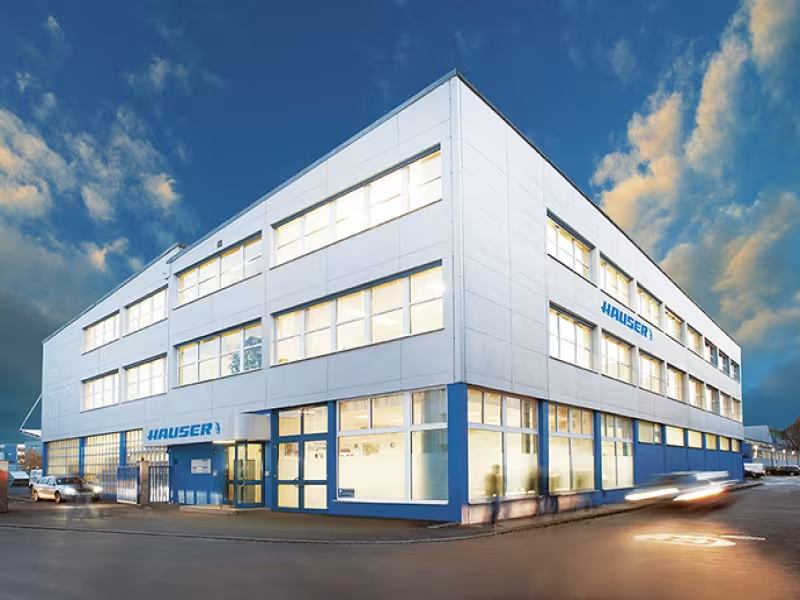
SHERIDAN, WYOMING - February 23, 2026 - HAUSER is marking 80 years in refrigeration by highlighting how integrated delivery models and natural-refrigerant systems are becoming central to modern food retail performance. Founded in 1946 in Linz-Urfahr, the company describes its evolution from a service business into a full-service provider for refrigerated cabinets, refrigeration technology, and turnkey fresh-food solutions serving retail, industrial, and convenience customers. For operators facing tighter energy targets, refrigerant compliance, and higher uptime expectations, HAUSER's message is that "one partner" delivery-planning through lifecycle service-can reduce project risk and simplify multi-site rollouts.
From Service Roots to Turnkey Project Delivery
HAUSER frames its growth story around moving from early refrigerated cabinet manufacturing into a broader end-to-end project role. Instead of supplying components only, the company positions itself as a turnkey provider supporting consultancy and planning, production, installation, maintenance, and lifecycle services.
For retail chains and industrial operators, this integrated approach typically matters most in three places: rollout speed, accountability, and service continuity. A single point of contact can help reduce coordination overhead between cabinet suppliers, refrigeration contractors, controls providers, and service teams-especially when store formats differ or projects span multiple countries.
Natural Refrigerants and Energy Strategy as a Compliance Baseline
HAUSER emphasizes natural refrigerants, specifically CO₂ and NH₃, as a core pillar of its technology direction. The company links this to "increasing regulatory requirements" and the operational push for energy efficiency, positioning refrigeration design and control strategies as a primary lever for store energy performance.
From a buyer perspective, the practical value of this positioning is less about novelty and more about future-proofing: choosing refrigerants and architectures aligned with regulation trends can reduce retrofit risk and help protect total lifecycle cost-particularly for retailers standardizing store concepts for repeated deployment.
Remote, Connect, and Predictive Maintenance for Availability
HAUSER highlights Remote and Connect technologies alongside data-driven services such as predictive maintenance. The stated intent is to enable energy savings, modernization flexibility, and earlier detection of potential issues-so service interventions can be planned proactively and system availability remains high.
For operators, the key business question is how these capabilities translate into measurable outcomes: fewer emergency callouts, faster troubleshooting, and better scheduling of maintenance windows. Even without detailed KPI claims in the source, the operating logic is clear: diagnostics plus planned service tends to reduce disruption in high-traffic retail environments and can improve reliability in industrial cold-chain use cases where downtime directly threatens product integrity.
Cabinet Portfolio and Store-Format Flexibility
On the equipment side, HAUSER describes a broad portfolio of refrigerated cabinets ranging from plug-in units to modular systems, with an emphasis on efficiency, ergonomics, and design. The company also points to "transparent glass concepts," high-quality materials, and flexible modules intended to support product presentation across different store layouts.
This matters commercially because fresh-food zones and frozen categories are often high-impact areas for shopper experience and basket conversion. Retailers typically want standardized modules that still allow local adaptation-without creating service complexity. A modular approach can also support phased refurbishments and format changes, where operators need to modernize parts of a store without full reconstruction.
Industrial and Logistics Use Cases Beyond the Sales Floor
HAUSER extends its positioning beyond food retail to industrial applications, naming food producers, logistics companies, and distribution centers as beneficiaries of holistic project execution. The source highlights in-house production, technical know-how, and high system availability as value points.
For procurement and operations teams in these environments, turnkey execution is often evaluated through implementation risk: commissioning quality, integration with existing infrastructure, and long-term service coverage. A supplier that can manage design-to-service continuity can reduce handover issues and shorten stabilization time after go-live.
Workforce Development and 24/7 Service Model as Differentiators
HAUSER places significant weight on talent development, stating it offers a dual apprenticeship in refrigeration and electrical engineering. It also references repeated strong results at EuroSkills, WorldSkills, and other industry competitions as an indicator of training quality.
On the service side, the company describes 24/7 availability, data-driven diagnostics, and a lifecycle approach aimed at long-term reliability. For retail chains and industrial operators, the differentiator is often not the cabinet alone, but the service model behind it-particularly when equipment is deployed at scale and needs consistent maintenance standards across regions.
Scale Snapshot and Manufacturing Footprint
HAUSER describes manufacturing at two production sites in Austria and the Czech Republic, with a portfolio spanning refrigerated cabinets (including multideck chillers, freezer units, and service counters), centralized and decentralized refrigeration systems and controls, cold rooms, cold storage facilities, and service offerings such as remote monitoring and energy optimization. The company also states that in the 2024/25 financial year it generated sales of around 410 million euros with 1,500 employees.
For buyers, these scale indicators tend to function as a risk filter: footprint and workforce depth can signal the ability to support long-term service obligations, spare parts continuity, and multi-site programs.