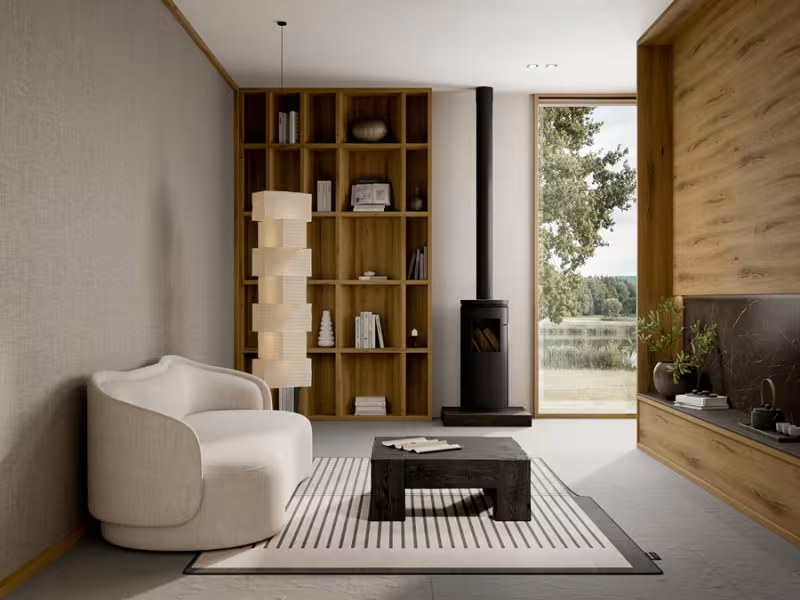
SHERIDAN, WYOMING - May 19, 2026 - The post-Salone del Mobile 2026 interior design landscape is showing a clear movement away from layered neutral palettes toward immersive monochrome environments built around solid colors and material-driven surfaces. Saviola is aligning its 2026 color direction with this broader market shift, which places color at the center of spatial identity rather than treating it as a secondary decorative feature. Across Milan Design Week 2026, designers increasingly adopted single-color environments that integrate walls, ceilings, furnishings and accessories into unified visual systems, reflecting growing interest in cohesive and sensory-focused interior concepts.
Monochrome Design Evolves Beyond Minimalism
The strongest interior design signal emerging from Salone del Mobile 2026 is not necessarily the introduction of entirely new colors, but the changing role of color within architectural and furniture design. Designers are increasingly applying one dominant color across multiple surfaces and elements to create immersive environments with stronger visual continuity.
This approach differs from recent interior trends built around soft tonal layering and restrained neutral combinations. Instead, monochrome design in 2026 emphasizes visual consistency and spatial identity through continuous chromatic application. The result is an environment where furniture, architecture and surface materials function as part of a coordinated design language rather than separate decorative layers.
The trend also reflects broader interest in interiors that deliver stronger emotional and sensory impact while maintaining formal simplicity.
Color Drenching Shapes New Spatial Strategies
A central concept emerging from Milan Design Week 2026 is the expanded use of "color drenching," where a single hue extends throughout an entire space. Walls, ceilings, upholstery, furnishings and accessories are treated as components of one connected chromatic system.
Rather than emphasizing minimalism, the approach creates immersive visual environments designed to strengthen spatial coherence. The technique also reduces visual fragmentation within interiors, allowing texture, lighting and materiality to play a more prominent role in defining atmosphere.
According to the design direction presented around Salone del Mobile 2026, monochrome environments are increasingly being used to establish recognizable and highly curated spaces. The strategy supports both residential and commercial interior applications where identity and experiential consistency are becoming more important in design planning.
Earth Tones and Jewel Colors Gain Momentum
The 2026 palette direction highlighted after Salone del Mobile combines saturated natural tones with deeper and more expressive chromatic selections. Rather than relying on broad multi-color compositions, designers are focusing on concentrated and deliberate color application.
Key color directions include:
- Intensified earth tones such as deep terracotta, rust and rich ochre
- Jewel-inspired shades including ruby, garnet, amethyst and deep blues
- Natural greens including sage green and moss green
These colors are being integrated into interiors not as accent elements but as defining structural components of the overall design concept. The growing use of deeper tones also reflects market demand for interiors that balance warmth, visual depth and material authenticity.
Material Surfaces Become Central to Color Expression
The monochrome trend presented during Salone del Mobile 2026 relies heavily on material interaction rather than flat surface treatment. Solid colors are increasingly paired with textured finishes including brushed wood, natural stone, plaster and raw textiles.
This material-driven approach allows monochrome environments to maintain visual complexity while preserving chromatic consistency. Surface texture, light reflection and tactile variation become essential elements in how color is perceived across a space.
The combination of saturated tones and textured materials also supports a more natural and less artificial interior aesthetic. Rather than creating purely decorative environments, the approach emphasizes sensory engagement through the relationship between color, light and material surfaces.
For manufacturers and interior suppliers, this direction may increase demand for finishes capable of delivering both chromatic precision and material depth across coordinated product systems.
Design Industry Shifts Toward Stronger Visual Identity
The renewed emphasis on solid colors signals a broader evolution in contemporary interior design strategy. After several years dominated by restrained palettes and softened tonal transitions, designers are increasingly using color as a primary architectural and experiential tool.
Salone del Mobile 2026 demonstrated that monochrome environments can combine simplicity with stronger emotional presence. By reducing visual noise and focusing on singular chromatic identity, designers are creating interiors intended to feel more immersive, recognizable and materially authentic.
The direction also reflects changing expectations across hospitality, residential and commercial interiors, where cohesive visual identity is becoming increasingly important in differentiating spaces and reinforcing brand or lifestyle positioning.
Saviola Aligns 2026 Color Direction With Market Shift
Saviola's 2026 color presentation reflects the broader industry movement toward immersive monochrome interiors and material-focused design systems. The company's focus on solid colors and coordinated surface applications aligns with wider trends emerging from Milan Design Week and Salone del Mobile 2026.
As monochrome interiors continue gaining traction, manufacturers operating in furniture, surfaces and interior materials are likely to place greater emphasis on coordinated chromatic collections capable of supporting integrated spatial concepts. The growing importance of texture and materiality may also influence future product development strategies across the design supply chain.