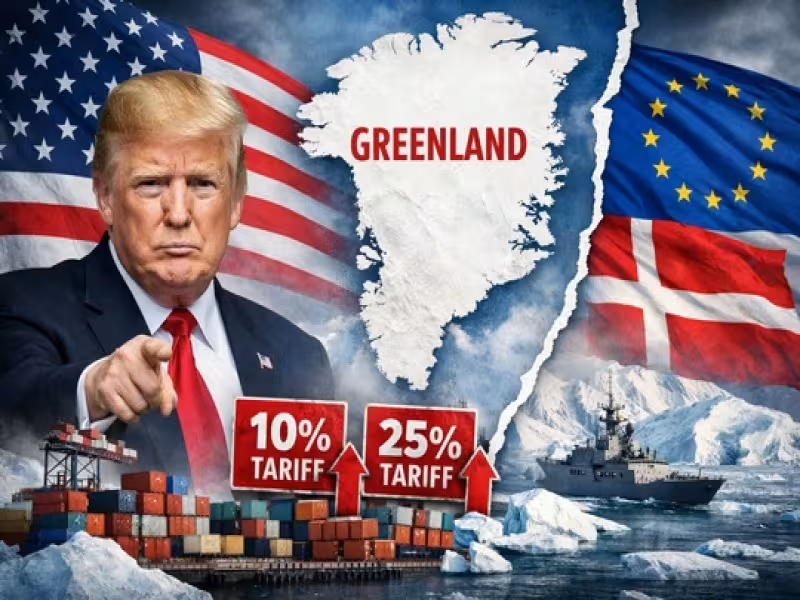
SHERIDAN, WYOMING - January 19, 2026 - Escalating public statements by the U.S. president regarding potential additional tariffs on goods from several European countries are heightening concern across German industry, as political tensions linked to Greenland increasingly spill into trade policy discussions. Although no formal executive order or legally binding measures have been enacted, the signals alone are already affecting corporate planning. According to SPECTARIS, the German industry association representing optics, photonics, analytical and medical technologies, the situation underlines how quickly geopolitical disputes can translate into economic pressure, with direct implications for investment decisions, supply-chain stability, and Europe's competitive position in global markets.
Rising Trade Uncertainty and Industrial Exposure
SPECTARIS views the renewed tariff rhetoric as another example of the fragility of international trade relations in an era of geopolitical tension. Politically motivated trade measures, even when not yet implemented, introduce uncertainty that can delay or redirect capital investment and complicate long-term planning for export-oriented industries. From an operational standpoint, companies across multiple sectors must factor potential cost increases, disrupted sourcing strategies, and fluctuating market access into their risk assessments. The association emphasizes that such uncertainty rarely affects isolated industries but instead propagates along entire value chains, amplifying economic impact well beyond the initially targeted goods.
Strengthening European Resilience and Competitiveness
In response, SPECTARIS highlights the strategic importance of reinforcing Europe's economic resilience and competitiveness. The association points to recent progress in diversifying trade relationships as evidence that new, reliable partnerships can be built. Broadening market access and reducing dependency on individual countries are seen as central pillars for mitigating geopolitical risk. For European manufacturers, this means aligning trade policy more closely with industrial strategy to ensure that export-driven sectors can maintain stability even as global conditions become less predictable.
Balancing Transatlantic Relations and Risk Management
While cautioning against escalation, SPECTARIS also underscores the continued importance of the United States as a key trading partner. Any potential countermeasures at the European level would need to be carefully coordinated with industry stakeholders to avoid unintended consequences. From a B2B perspective, uncoordinated retaliatory tariffs can introduce compliance complexity, increase administrative burdens, and undermine existing customer relationships. Early and structured dialogue between policymakers and industry is therefore critical to ensure that responses are proportionate and aligned with real-world operational constraints.
Rule-Based Trade as an Industrial Priority
The association reiterates that a rule-based international trading system remains fundamental for industrial planning and long-term growth. Stable frameworks enable companies to make capital-intensive decisions with greater confidence, particularly in sectors characterized by long development cycles and high regulatory requirements. SPECTARIS argues that Europe should continue to deploy its trade and industrial policy instruments strategically, reinforcing multilateral rules while avoiding steps that could trigger damaging cycles of escalation.
Sectoral Impact Across High-Technology Industries
SPECTARIS represents around 400 predominantly medium-sized, export-oriented German companies spanning consumer optics, photonics, medical technology, and analytical, bio, and laboratory technologies. These sectors are deeply integrated into global supply chains and depend on predictable market access. Heightened trade uncertainty can therefore affect not only exports but also collaborative research, cross-border production networks, and long-term innovation strategies. From an industry perspective, safeguarding open and reliable trade channels is directly linked to maintaining Europe's position in future-oriented technology fields.
Ongoing Dialogue and Policy Engagement
The association remains in close contact with political decision-makers and European partner organizations to monitor developments and contribute industry expertise to policy discussions. By maintaining active engagement, SPECTARIS aims to ensure that industrial realities are reflected in trade policy responses. As geopolitical tensions continue to influence economic relations, the association sees proactive coordination as essential to limiting disruption and protecting the foundations of Europe's export-driven industrial model.
Learn more about SPECTARIS and its industry positions at https://www.spectaris.de.