infrastructure_development

China-Built Waste Plant Ends Bishkek's Garbage Crisis, Powers Grid

Bishkek – September 20, 2026 -- Central Asia's first waste-to-energy incineration plant has begun cutting Bishkek's household waste stream by 1,000 tons a day, supplying 146 million kilowatt-hours of electricity annually to the Kyrgyz grid and reducing carbon emissions by up to 100,000 tons a year.

Plant ends five decades of landfill overflow around Kyrgyzstan's capital

For decades Bishkek relied on a single municipal landfill that was expanded six times as the population grew, leaving residents to contend with accumulating garbage, odors and dust. The China-Kyrgyzstan waste treatment and power generation project, which began commercial operations at the end of 2025, was developed to address the deficit. The facility currently processes 1,000 tons of household waste daily against an overall planned capacity of 3,000 tons.
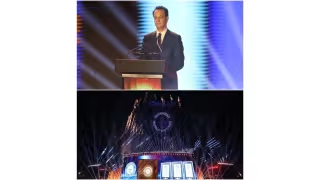
University of Benghazi Reopens After 11 Years, Sets Three Guinness Records

Image
University of Benghazi Reopens After 11 Years, Sets Three Guinness Records

Benghazi – -- The University of Benghazi reopened all faculties and facilities on September 12, 2026, ending more than eleven years of closure caused by damage sustained during the Libyan Armed Forces' war against terrorist groups. The reconstruction was carried out by the Libyan Development and Reconstruction Fund, led by Director General Engineer Belqasim Khalifa Haftar, who personally oversaw the project.

Fund rebuilds entire university city in three years

The integrated campus reconstruction covered the Faculties of Engineering, Arts, Law, Science and Languages, plus the central library, academic and administrative buildings, laboratories, student residences, service facilities, infrastructure and internal roads. The University of Benghazi, known as the 'Mother of Libyan Universities,' serves nearly 100,000 students and has operated as a free-education institution producing generations of scientists, academics and officials.