Ai Security

Cisco Adds Anthropic's Claude Mythos to AI Defense Red Teaming

Image

Cisco Adds Anthropic's Claude Mythos to AI Defense Red Teaming

MELBOURNE, Australia – November 10, 2026 -- Cisco is adding Anthropic's Claude Mythos to its AI Defense red teaming framework, giving security teams frontier-level adversarial reasoning to stress-test AI applications and agents, while Splunk and Cisco IQ updates tie agent cost and infrastructure exposure to remediation workflows.

Adaptive red teaming with Claude Mythos is coming soon for select enterprises. Cisco launched AI Defense in January 2025 and says it has since helped hundreds of customers find critical flaws in AI models, applications and agents before production.

CIQ: AI Finds Linux Flaws Fast, but Patches Still Need Experts

Image
CIQ: AI Finds Linux Flaws Fast, but Patches Still Need Experts

Global – November 10, 2026 -- Only a fraction of AI-generated Linux kernel vulnerability patches can ship without modification, even with the best models available, according to enterprise Linux vendor CIQ. The company responded to OpenAI's announcement that it had discovered 948 Linux kernel vulnerabilities and generated patches it offered to the upstream Kernel.org project.

CIQ's kernel engineers use AI to explore fixes. Finding a bug and drafting a patch are now fast, the company says, but a fix that is safe, maintainable and compatible across years of supported kernels still takes expert engineers. OpenAI's own testing found that patches fixing the exploit could still cause performance issues, violate coding conventions or miss variants of the vulnerability.

OpenSSF Joins MOSAIC, Adds 3 Members as AI Outpaces Security Reviews

Image
OpenSSF Joins MOSAIC, Adds 3 Members as AI Outpaces Security Reviews

SALT LAKE CITY – November 10, 2026 -- Fifty-eight percent of surveyed teams ship code faster than security reviews can keep up, according to a 2026 study supported by the Open Source Security Foundation (OpenSSF), as the Linux Foundation initiative expands its AI security programs and adds three members.

Survey finds 60% of teams report more external packages from AI coding assistants

The State of AI Impact on Software Security and Cybersecurity 2026 report was supported by OpenSSF, ActiveState and the LF AI & Data Foundation. It found that 60% of respondents say AI coding assistants have increased the number of external packages in their codebases. OpenSSF says AI speeds up both code production and vulnerability discovery for attackers and defenders. Reporting windows are also shrinking under regulations such as the EU Cyber Resilience Act.

Qualys Adds Five Partners to mROC for Mobile, OT and Identity Risk

Image
Qualys Adds Five Partners to mROC for Mobile, OT and Identity Risk

Foster City – November 10, 2026 -- Qualys (NASDAQ: QLYS) has expanded its global mROC program to five strategic technology alliance partners (Claroty, Lookout, NowSecure, Nozomi Networks and Okta), feeding risk data from mobile, OT/IoT and identity systems into its Enterprise TruRisk Management (ETM) platform.

Partner telemetry flows into a single TruRisk score

Qualys says these attack surfaces are among the least measured in the enterprise. Phones, connected devices, industrial and medical systems, and identities often cannot run a traditional agent or tolerate active scanning. Their risk therefore goes unmeasured or sits in a separate tool with its own scoring.

MIND Launches Autonomous DLP to Secure Data Used by AI Agents

Image
MIND Launches Autonomous DLP to Secure Data Used by AI Agents

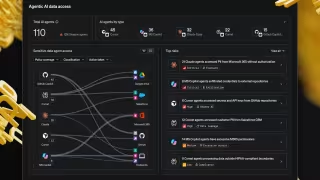
Seattle – November 09, 2026 -- MIND has launched DLP for Agentic AI, a data-centric security product that identifies active AI agents across the enterprise and on endpoints, detects risky data access in real time, and autonomously alerts and remediates issues.

MIND targets data access before AI agents act

Agentic AI can autonomously create, access, transform and share data across SaaS applications, local devices, homegrown systems and third-party tools. MIND says that without clear visibility and controls, the resulting data security gaps can slow AI adoption and put business outcomes at risk.

The company says it secures the data rather than the models or their outputs. Sensitive data is understood, governed and protected before any AI agent can access or act on it.

Arcjet Launches Three AI Security Models to Stop Agent Hijacking

San Francisco – November 06, 2026 -- Arcjet released Himalia 1, a prompt injection detection model that scored F1 values of 0.964 and 0.971 on two public datasets, and opened early access to two further models built for coding agents and autonomous security agents.

Three models target different agent environments

Himalia 1 is generally available and is a general-purpose detector for chatbots, AI applications and model endpoints. It flags attempts to override application instructions, extract internal information or manipulate agent behavior.

Thebe 1, for coding agents, is designed to separate legitimate development activity from malicious instructions hidden in tool outputs, web pages and repositories. Arcjet says it is built to cut false positives when agents run commands or touch code.

Evoke Security Plans Claude Cowork Integration to Track Cloud Agents

Image
Evoke Security Plans Claude Cowork Integration to Track Cloud Agents

Washington – November 03, 2026 -- Evoke Security will integrate its agent detection and response platform with Claude Cowork, extending monitoring to AI agents that keep working in the cloud after employees close their laptops. The company announced the plan as Anthropic expands security integrations for Claude Enterprise. The integration is scheduled for a future release, and no date was given.

Agents move work off the endpoint, where security teams built a decade of visibility

Employees now hand AI agents real tasks: reading files, calling tools and handling sensitive data on their behalf. As that work shifts to the cloud, it leaves the endpoint, where security teams have spent a decade building visibility.

An agent can complete a legitimate task and still take an unexpected action along the way. Without a full record of what the agent did, security teams cannot tell routine agent work from the opening move of an incident.

CrowdStrike Extends OverWatch Hunting to AI Agents, Google Cloud

Image
CrowdStrike Extends OverWatch Hunting to AI Agents, Google Cloud

Global – October 31, 2026 -- CrowdStrike has extended Falcon Adversary OverWatch managed threat hunting to AI applications and autonomous agents monitored by Falcon Guardian, and added telemetry-driven hunting for Google Cloud, bringing its coverage of the three major public clouds in line.

OverWatch Cross-Domain now covers AI agent activity around the clock

Falcon Adversary OverWatch Cross-Domain now provides 24/7 proactive hunting across AI applications and agent activity monitored by Falcon Guardian. Hunters combine Guardian's runtime context with Falcon platform telemetry and frontline adversary intelligence to find manipulation, abuse and emerging tradecraft that automated detections may miss.

CrowdStrike Falcon Guardian Reaches Hundreds of Firms Since Launch

Image
CrowdStrike Falcon Guardian Reaches Hundreds of Firms Since Launch

Las Vegas – October 31, 2026 -- CrowdStrike's Falcon Guardian has been deployed at hundreds of organizations since its September 1, 2026 launch, and early users report finding over 260 distinct AI services at a single organization and confidential documents being shared with public AI chatbots.

Customers span financial services, healthcare, manufacturing, retail, energy and the public sector. They are responding to the shift from AI that generates content to agents that reason, decide and act autonomously. Employees run AI assistants in browsers and desktop apps, developers run coding agents that read files and execute commands, and business teams connect agents to enterprise data through Model Context Protocol (MCP) servers.

CrowdStrike Taxonomy Grows to 222 Prompt Injection Techniques

Image
CrowdStrike Taxonomy Grows to 222 Prompt Injection Techniques

Global – October 31, 2026 -- CrowdStrike has expanded its public Prompt Injection Taxonomy to 222 techniques, adding attacks that target how autonomous AI agents plan rather than only what they are prompted to do.

Attackers shape the context agents plan from

An agent breaks a goal into steps, picks tools and executes. Attackers no longer need to push one forbidden request past an input or output filter. They can instead shape the context the agent plans from, so a restricted action looks like the logical next step. Because each step can look benign alone, defenses that check steps in isolation may miss what the full plan adds up to.