OPC UA vs MQTT: Match the Protocol to the Plant Data Role
Image
OPC UA vs MQTT: Match the Protocol to the Plant Data Role

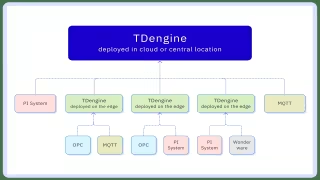
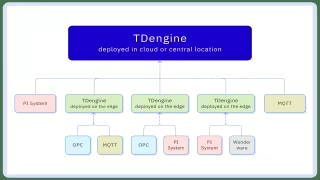
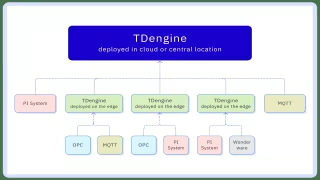
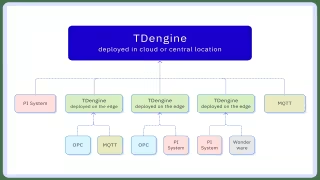
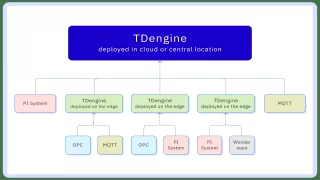
Global – October 27, 2026 -- Industrial data architects should choose OPC UA when a collector must discover and read a structured source, and MQTT when producers publish through a broker to one or more consumers, according to a TDengine technical comparison. The guide adds that the two names do not describe equivalent layers, so the rule is only a starting point.

OPC UA preserves equipment context that MQTT leaves to the architect

OPC UA is a family of specifications covering Client/Server services, information modeling, Alarms and Conditions, Historical Access and PubSub. A server can organize measurements under equipment objects, attach engineering units and ranges, and expose status, timestamps and methods. A client can browse that address space instead of encoding meaning in topic strings.

Not every server delivers a rich model, however. Some expose flat tag lists, incomplete metadata or vendor-specific structures.
OPC UA Historians Need Alarm Records, Not Just Tag History

Image
OPC UA Historians Need Alarm Records, Not Just Tag History

Global – October 27, 2026 -- A pump pressure trend shows when a value left its normal range but cannot show which alarm changed state, what severity the server reported, or when an operator acknowledged it. Those answers sit in separate OPC UA records, and historian designs must decide which questions each record has to answer.

Tag history stores values, not alarm lifecycles

An OPC UA client collects a variable through a monitored item. When DataChange criteria are met, the server sends a DataValue that the historian can store with source timestamp, server timestamp, and StatusCode, depending on the collector mapping. Sampling, deadbands, queues, and timestamp selection determine how much process behavior survives.

Business Jet Adds 70,000 Sq Ft of Hangars at Dallas Love Field

Image
Business Jet Adds 70,000 Sq Ft of Hangars at Dallas Love Field

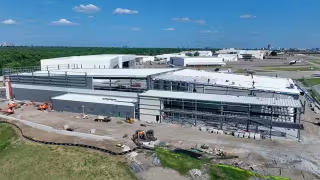
Dallas – October 27, 2026 -- Business Jet is building two hangars totaling nearly 70,000 square feet at Dallas Love Field (KDAL), lifting its footprint to 475,000 square feet across 19 hangars and 2 executive terminals. Completion of the 18th and 19th hangars is scheduled for January 2026.

New hangars are sized for the largest ultra-long-range jets

The side-by-side hangars have 28-foot doors to fit aircraft such as the Gulfstream G700 and Bombardier Global 7500. Business Jet designed each building for a different tenant profile. One is a build-to-suit space for a single tenant, with custom design and elevated lobby finishes. The other is configured for multiple tenants, with seven individual office and shop spaces.

Both buildings include epoxy-coated floors, LED lighting, large format fans, radiant tube heating and electric vehicle chargers. Integrated utility pedestals supply 208/480/115-amp power, water and compressed air.

Slowest OPC UA Rate That Preserves Process Behavior Is Right

Image
Slowest OPC UA Rate That Preserves Process Behavior Is Right

Global – October 27, 2026 -- The right OPC UA collection rate is the slowest configuration that still preserves the process behavior needed for operations and historical analysis, and it is set across five separate stages rather than one "scan rate." Device updates, server sampling, subscription publishing, filtering and historian storage each have their own timing. Treating them as one setting can add load without adding information, or hide a pressure transient the historian was expected to explain.

Server sampling cannot beat the source update rate

A PLC may update a temperature every 500 milliseconds while the OPC UA server refreshes its internal value once per second. A client request to sample every 100 milliseconds then re-reads the same value or detects changes no sooner than the server exposes them.

OPC UA Mapping: Keep NodeId, Asset Key and Display Name Separate

Image
OPC UA Mapping: Keep NodeId, Asset Key and Display Name Separate

Global – October 27, 2026 -- An OPC UA NodeId tells a client which node to read, but not which pump, line or measurement that node represents in the plant. Reliable mapping therefore keeps source identity, browse path, equipment identity and user-facing label connected but stored as separate fields.

Namespace indexes can change between sessions, so URIs must be stored

A NodeId such as ns=4;s=Pump01.DischargePressure uses 4 as an index into the session's NamespaceArray. The OPC UA specification allows that index to change in a later session. A stored ns=4 string without its namespace URI can point to the wrong namespace after the server's table changes. Mappings should retain the endpoint, namespace URI, identifier type and identifier, and resolve the current index at connection time.

TDengine taosX gRPC Is Unencrypted by Default in OT-IT Links

Image
TDengine taosX gRPC Is Unencrypted by Default in OT-IT Links

Global – October 27, 2026 -- The taosX gRPC interface in TDengine TSDB Enterprise is unencrypted by default, so teams collecting OPC UA data across network zones must explicitly enable and verify TLS, according to TDengine's security documentation. The point is part of a wider OT/IT integration checklist: a working OPC UA client beside the server proves only that the endpoint and credentials work locally, not that the same path should be opened from an enterprise historian into the control network.

Zones and flows come before collector placement

Segmentation protects more than confidentiality. OPC UA protocol security provides application authentication, message integrity and confidentiality, while network controls provide routing boundaries, firewall policy, inspection and isolation. Neither replaces the other: an encrypted session can still cross an overbroad firewall rule, end on a compromised collector, or run under an over-privileged account.

TransCore wins Sydney's first tagless tolling contract

Image
TransCore wins Sydney's first tagless tolling contract

Nashville – October 27, 2026 -- TransCore has won a contract from Transport for New South Wales (TfNSW) to supply the tolling system for Sydney's Western Harbour Tunnel. It is the company's first tolling deployment in Australia and the country's first tagless, video-only tolling system.

TransCore will deploy its Infinity Digital Lane System with video analytics

The multi-lane free-flow system uses video analytics with overhead detection to detect, identify and classify vehicles at highway speeds. It needs no in-pavement sensors, which TransCore says simplifies maintenance and cuts costs. New machine learning capabilities automate vehicle classification and image processing, reducing manual intervention and operating costs while improving accuracy.

TransCore Launches 18-Mile I-80 Solano Express Lanes in Bay Area

Nashville – October 27, 2026 -- TransCore has taken an 18-mile stretch of Interstate 80 through Fairfield and Vacaville live as express lanes, its fourth corridor for the Bay Area Infrastructure Financing Authority (BAIFA) since 2017.

TransCore integrates AVI and ALPR tolling across the I-80 corridor

TransCore supplied the tolling system integration for the corridor. The roadside system uses Automatic Vehicle Identification (AVI) and Automatic License Plate Recognition (ALPR) to detect and toll all users. Covered vehicle types are carpools, vanpools, buses, motorcycles and solo drivers with FasTrak or FasTrak Flex tags.

Dynamic pricing adjusts toll rates in real time based on traffic conditions. Overhead digital signs show the current toll for each zone.

DelDOT Goes Live on Schedule With TransCore Integrity Tolling Platform

Image
DelDOT Goes Live on Schedule With TransCore Integrity Tolling Platform

NASHVILLE – October 27, 2026 -- The Delaware Department of Transportation (DelDOT) has taken TransCore's latest-generation Integrity Back Office System live on schedule and has already granted system acceptance, replacing its legacy platform for statewide tolling and E-ZPass operations.

New platform consolidates five core toll functions in one system

The upgraded system unifies toll processing, account management, image review, violations processing and financial reporting. TransCore and DelDOT have worked together for many years on E-ZPass customer service operations.

The deployment moves Delaware to a cloud-capable architecture built to run in clustered, scalable Kubernetes environments. TransCore says the design handles high transaction volumes and adapts to policy and fee changes.

TransCore Names Deborah Sharpless First Chief Experience Officer

Image
TransCore Names Deborah Sharpless First Chief Experience Officer

Nashville – October 27, 2026 -- TransCore, a tolling technology and traffic-management supplier, has appointed Deborah Sharpless as its first Chief Experience Officer (CXO), a newly created executive role aimed at tightening ties with tolling and transportation agencies.

Former Maryland Transportation Authority CFO brings 25 years of public sector experience

Sharpless has more than 25 years of experience in finance, operations and customer service. Most recently she was Chief Financial Officer of the Maryland Transportation Authority (MDTA), a role she took after serving as Deputy Executive Director.

She also chaired the E-ZPass Interagency Group Executive Board and served as a Director on the International Bridge, Tunnel and Turnpike Association (IBTTA) Board.