WaitWell Guide Flags Nemo-Q Tier Gaps for Public Agencies

Image

WaitWell Guide Flags Nemo-Q Tier Gaps for Public Agencies

McKinney, Texas – October 27, 2026 -- SMS alerts, appointment scheduling, multi-language service and skill-based routing all sit above Nemo-Q's $290-per-month Essentials plan, according to a WaitWell comparison of 10 queue management alternatives. WaitWell published the guide on its own site and discloses a commercial interest in its conclusions.

Entry plan caps at one location and ten workstations

Essentials includes unlimited users, visitors and service queues, plus digital signage, real-time reporting and automated workflows. Notifications are email only. A three-branch county office or a university one-stop running fifteen advising desks exceeds the plan ceiling immediately.

Cold Chain Teams Told to Tier Monitoring by Shipment Risk

Image
Cold Chain Teams Told to Tier Monitoring by Shipment Risk

Global – October 27, 2026 -- Cold chain operators should tier monitoring by shipment risk, using QR indicators, electronic data loggers and connected devices at different levels instead of one technology on every lane, according to a guide on cold chain monitoring systems.

Indicators flag exceptions with the simplest workflow

WarmMark QR monitors cumulative exposure above a specified temperature, while FreezeSafe QR identifies exposure below a specified temperature. QR-enabled documentation captures information at selected hand-offs without requiring every user to download and interpret a complete data file.

Products vulnerable in both directions need both limits covered. ColdChain Complete is aimed at shipments where upper and lower thresholds must be monitored together.

Coalition CISO: Security Teams Spend Finite Trust, Not Just Controls

Image
Coalition CISO: Security Teams Spend Finite Trust, Not Just Controls

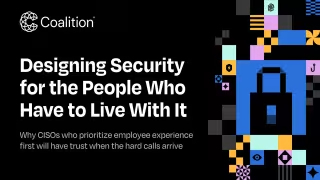
Global – October 27, 2026 -- Coalition's newly appointed Chief Information Security Officer, a 25-year InfoSec veteran, argues that security teams run on a finite supply of organizational trust, and that high-friction controls drain it and push staff toward less-protected workarounds.

Coalition's CISO treats organizational trust as a limited token budget

The executive spent five years at Coalition before taking the CISO role. The CISO describes trust as a basket of tokens: every control costs tokens, and some cost more than others. Friction belongs only where risk warrants it, while teams should look for changes that raise protection and lower cost at once. Hoarding tokens benefits attackers, the CISO writes, because a control adequate two years ago may fall short today. Coalition holds vendors and itself to the same standard.

Agentic AI Forces Enterprises to Extend Sovereignty to Agent Actions

Image
Agentic AI Forces Enterprises to Extend Sovereignty to Agent Actions

Global – – October 27, 2026 -- Enterprises deploying autonomous AI agents must extend sovereignty controls beyond data location and model hosting to cover agent identity, permissions, execution authority and oversight. Agents can interpret goals, select tools, call APIs, update applications and delegate work to other agents within a single task.

Governance shifts from controlling access to controlling actions

Traditional AI governance centers on datasets, approved models, processing locations and user access. Agentic systems make decisions inside the workflow itself, choosing which system to query, which tool to invoke and which action follows. A procurement agent investigating a supplier issue could pull supplier records, review purchase orders, analyze delivery records, compare contract terms and initiate an approval workflow. That chain spans several databases, applications, APIs, models and identity systems.

Only 22% of Firms Apply Sovereignty Rules to AI Models

Image
Only 22% of Firms Apply Sovereignty Rules to AI Models

GLOBAL – October 27, 2026 -- Only 22% of organizations have applied sovereignty or residency requirements to AI models, against 60% for data, according to a global 2025 survey cited in a new analysis of sovereign AI architecture.

Sovereignty controls thin out higher in the AI stack

The same survey found that 46% of organizations applied such requirements to infrastructure and 32% to applications. The decline leaves a structural blind spot: protecting enterprise data has limited value if the model processing it operates outside the intended control framework.

Enterprises Weigh Sovereign LLMs as EU AI Act Deadline Nears

Image
Enterprises Weigh Sovereign LLMs as EU AI Act Deadline Nears

Europe – October 27, 2026 -- Self-hosted LLM infrastructure tends to become the cheaper option above roughly 50 million tokens processed per day, while commercial APIs usually stay more economical below 5 million, according to AppsTek's analysis of when enterprises need a sovereign LLM. The figures are illustrative and should be checked against current provider pricing and actual workload patterns.

AppsTek's third piece in its sovereign AI series argues that the model layer is now a governance decision, not only a technology choice, as generative AI moves into regulated, revenue-bearing workflows.

Agentic QE Targets Testing Unit Costs as GenAI Pilots Hit 89%

Image
Agentic QE Targets Testing Unit Costs as GenAI Pilots Hit 89%

Global – October 27, 2026 -- Some 89% of organizations surveyed for the World Quality Report 2025 are piloting or deploying GenAI-augmented Quality Engineering (QE), but only 15% have reached enterprise-wide implementation. Respondents reported an average productivity gain of 19%. Vendors such as AppsTek are pitching agentic QE as a way to hold down testing unit costs as release volumes grow.

Maintenance work pushes up the cost of enterprise test automation

Each release adds workflows, integrations and regression paths while QE budgets stay tightly controlled. The pressure shows up in maintenance, contractor spend, rework and cost per release.

AI Agent Testing Must Cover Execution Paths, Not Just Answers

Image
AI Agent Testing Must Cover Execution Paths, Not Just Answers

Global – October 27, 2026 -- Two AI agent runs can return the same correct answer while carrying very different operational risk, which makes output-only checks insufficient for enterprise Quality Engineering (QE), according to a new AI agent testing framework built around four evaluation layers.

Recovered failures can look like clean successes

In the source's example, an agent retrieving an account balance queries an unnecessary privileged system, hits an authorization error, retries twice and then reaches the approved source. The user sees a correct result. An output-level assertion marks the run as a success, while a trace-level evaluation flags it as degraded.

Teekay Interns Build Earnings Forecast Model in 12-Week MPA Program

Image
Teekay Interns Build Earnings Forecast Model in 12-Week MPA Program

Singapore – October 27, 2026 -- Teekay hosted two interns for 12 weeks through a Maritime and Port Authority of Singapore (MPA) program, and one of them built a machine learning workflow to forecast vessel earnings from voyage, market, bunker, port and utilization data.

Intern deploys fleet procurement website in Singapore

Data analytics student Jonathon Lee worked on procurement and commercial analytics under Yi Chuen Ho, Regional Commercial Operations Manager, and Sajeev Soman, Manager, Procurements & Contracts. He built and deployed a fleet procurement website end to end, with dashboards for spares delivery and port call costs.

He also automated a previously manual charterer name-matching process.

Teekay Tankers Awards Vessel Teams for Top Hazard Reporting

Image
Teekay Tankers Awards Vessel Teams for Top Hazard Reporting

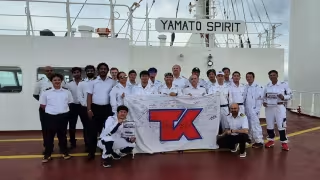
Global – October 27, 2026 -- Teekay Tankers has named this quarter's winners of its Hazard Reporting Awards, recognizing the vessel teams that reported the highest number of hazards through the company's cloud-based digital platform.

Teekay Tankers turns hazard reporting into a quarterly team contest

The company has gamified the process. Vessels are placed into teams that compete every quarter to report the most hazards. Winners are recognized publicly and receive a prize.

Seafarers log unsafe acts and conditions on a mobile-friendly platform

Crews use the platform to flag unsafe acts or unsafe conditions on board as they notice them. Early and frequent reporting lets senior management implement corrective action outside regular on-board inspections.