Dust CTO Pitches Company-Owned AI to Curb Model Vendor Lock-In

Image
Dust CTO Pitches Company-Owned AI to Curb Model Vendor Lock-In

Global – October 27, 2026 -- Dust, a collaborative AI platform, is targeting three forms of enterprise AI dependency: reliance on a single model provider, loss of control over agent-generated data, and limited visibility into costs and behavior, according to Co-Founder and CTO Stanislas Polu.

Dust builds a shared layer between staff, company data and multiple models

Polu said Dust lets teams work with AI, switch among supported frontier and open source models, and govern the context, agents and traces their work generates. The platform is multimodel by design, so companies can change models without rebuilding their context and workflows.

Polu argues that agent traces, which record instructions, context, model and tool choices, outputs and human feedback, may become one of a company's most valuable AI assets. He said that corpus could later help companies evaluate or train models for their specific work.

Vivix Pilots AI Furnace Twin to Cut Energy Use 3%-5%

Image
Vivix Pilots AI Furnace Twin to Cut Energy Use 3%-5%

Brazil – October 27, 2026 -- Brazilian flat glass maker Vivix expects to cut furnace energy consumption by 3%-5%, extend furnace lifespan by one year and shorten its data collection and analytics cycle by 80%, based on a pilot of an executable digital twin (xDT) built with Siemens, Snowflake and NVIDIA.

Vivix targets blind spots in 1,550°C-1,600°C float-glass furnaces

The furnace is one of the most critical and hardest-to-observe assets in float-glass production. At operating temperatures of roughly 1,550°C to 1,600°C, teams have limited direct visibility into how combustion gases, molten glass and refractory walls interact. Vivix supplies glass and mirrors to the construction and furniture markets.

Brilliant Earth Moves Analytics Into Snowflake, Retires Legacy BI

United States – – October 27, 2026 -- Brilliant Earth has moved more than 100 showroom operations users off a legacy BI platform and onto Posit dashboards running natively inside Snowflake, cutting software license costs while widening self-serve access to governed data.

The luxury jewelry retailer already reprices its diamond inventory daily through an automated model running in Snowflake. That capability prompted the company to adopt the platform. Weekly data science reports captured only moments in time, so Brilliant Earth set out to give decision-makers direct access to the same data and models.

Posit Team runs as a Snowflake Native App on Snowpark Container Services

Brilliant Earth installed Posit Team inside Snowflake instead of maintaining a separate server with its own security protocols. Snowflake roles, user permissions and table access now govern Posit as well.

Snowflake Sets Out Ground-Analyze-Act Framework for AI Agents

Image
Snowflake Sets Out Ground-Analyze-Act Framework for AI Agents

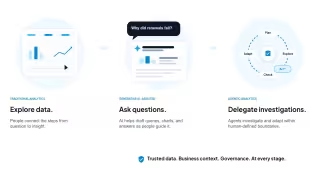
Global – October 27, 2026 -- Snowflake is built around three pillars, Ground, Analyze and Act, wrapped in a governance layer it calls Assure, to let AI agents run open-ended business investigations on enterprise data without copying that data into each agent platform.

The model targets agents that decide which data to examine, learn from each result and choose the next step. A churn probe, for example, could compare customer segments, product usage and support issues, then feed a recommended response into a retention workflow.

Multnomah County Completes Legacy Data Migration in Five Months

Image
Multnomah County Completes Legacy Data Migration in Five Months

Portland – October 27, 2026 -- Multnomah County, Oregon, migrated a decade-old SQL Server environment to a modern data platform in five months, a timeline that public sector organizations often stretch over years, according to a session at this year's Snowflake Summit.

Multnomah County replaces undocumented SQL Server estate with AI-assisted migration

The county's legacy environment spanned dozens of business intelligence workloads and had been built by engineers who had since left. Documentation was sparse, the architecture was inconsistent and costs were climbing.

Snowflake Cuts Incident Fix Time to 16 Minutes With CoCo Agent

Image
Snowflake Cuts Incident Fix Time to 16 Minutes With CoCo Agent

North America – October 27, 2026 -- Snowflake's product data science team cut the time from pipeline incident to a tested, reviewable fix to under 16 minutes using its CoCo agentic AI assistant. Before CoCo, diagnosis took a skilled engineer about 30 minutes per case. The result comes from a four-part framework that Snowflake built to measure AI value beyond license counts and prompt volumes.

Snowflake sorts AI work into three levels instead of counting prompts

Dashboards built on access and activity score an organization running 1,000 explanations the same as one running 1,000 pipeline builds and anomaly investigations. Snowflake's framework separates foundational work (explaining code, answering questions), applied development (writing code, exploring data, building reports) and agentic work (multistep processes where AI uses tools to finish an outcome). Real capacity gains should appear in the agentic tier.

Snowflake Cuts Forecast Time From a Week to Hours With CoCo Profile

Image
Snowflake Cuts Forecast Time From a Week to Hours With CoCo Profile

Global – October 27, 2026 -- Snowflake's sales finance team has cut its monthly forecast and variance analysis from more than a week to a few hours. It did so by giving its CoCo AI standing context about company data, terminology and workflows.

Profile cuts steps per answer from 3.0 to 1.3

Across 44 finance users, those with a 'GTM Finance' profile reached an answer in about 1.3 steps, against about 3 steps for those without one (Snowflake internal CoCo usage, February to May 2026). Without the profile, the AI spent roughly three steps per session finding the right data source and resolving terminology.

Each extra step adds about 0.05 credits, roughly 10 cents at US$2 per credit. A five-step session therefore costs about three and a half times a one-step session. At every step count in the data, sessions with the profile cost less than those without.

EU Regulators Name DORA, AI and Securitisation 2027 Priorities

EU – October 27, 2026 -- The Joint Committee of the European Supervisory Authorities (EBA, EIOPA and ESMA) has published its Annual Work Programme for 2027. It lists digital operational resilience, technological innovation, sustainable finance, securitisation and cross-sectoral risk monitoring as the five key priorities for the EU financial sector.

ESAs continue DORA oversight of critical ICT third-party providers

Under the Digital Operational Resilience Act (DORA), the three authorities will continue oversight of critical ICT third-party service providers. They will also work to strengthen the financial sector's preparedness against cyber threats. Financial institutions that depend on external technology vendors remain within the supervisory scope.

ESMA: EEA Regulators Imposed 950+ Sanctions, €82M in Fines in 2025

Image
ESMA: EEA Regulators Imposed 950+ Sanctions, €82M in Fines in 2025

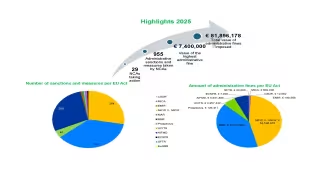
European Union – October 27, 2026 -- National authorities across the European Economic Area (EEA) imposed more than 950 administrative sanctions and measures in 2025, with administrative fines totaling almost €82 million, according to the third Sanctions Report from the European Securities and Markets Authority (ESMA).

The number of sanctions and measures was stable compared with the past two years. The report also records an increased use of settlements.

Market abuse and MiFID breaches dominate enforcement activity

As in previous years, enforcement focused mainly on breaches of the Market Abuse Regulation and the Markets in Financial Instruments Directive and Regulation.

Germany, France and Spain account for two thirds of fine value

Enforcement remained concentrated in a small number of jurisdictions. Germany, France and Spain together accounted for two thirds of the total value of administrative fines across the EEA.

ESMA Completes T+1 Rulebook as EU Settlement Switch Nears

European Union – October 27, 2026 -- The EU will switch to T+1 settlement on 11 October 2027, and the European Securities and Markets Authority (ESMA) says the regulatory framework is now complete. ESMA is calling on market participants to finalise technical preparations, assess readiness across their entire ecosystems and start testing across the trading and settlement chain as soon as possible.

First compliance deadline for allocations and confirmations falls on 7 December 2026

Investment firms and their clients must comply with the new allocation and confirmation requirements from 7 December 2026. From that date, the amended RTS on Settlement Discipline makes two things mandatory:

- electronic, standardised communication channels and international messaging standards;
- machine-readable communication methods, except during temporary technical disruptions.