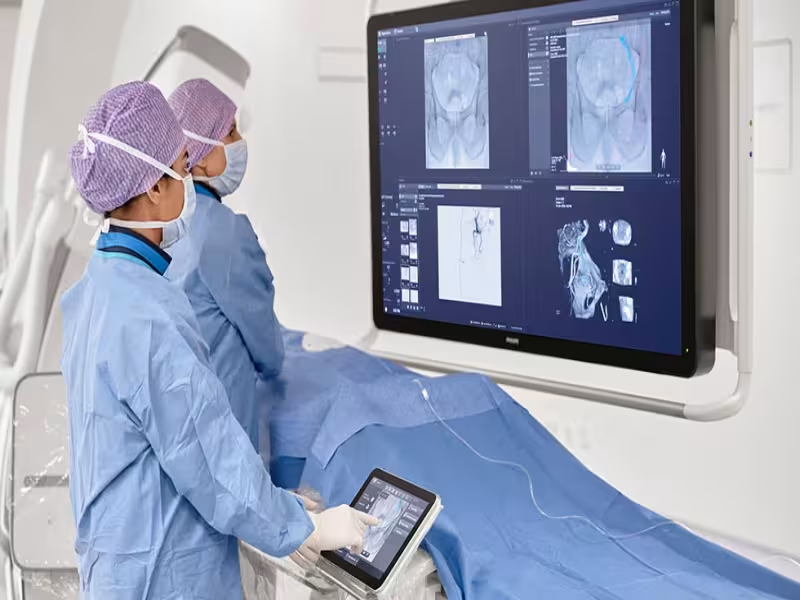
SHERIDAN, WYOMING - February 03, 2026 - Royal Philips has announced that the PreciseOnco research consortium, coordinated by Philips, has been awarded EUR 14.9 million in public funding from the European Union's Innovative Health Initiative (IHI) to accelerate the development of next-generation precision cancer treatments. The five-year program brings together advanced medical imaging, robotic guidance, and artificial intelligence to improve the safety, accuracy, and efficiency of minimally invasive cancer therapies. With additional in-kind and partner contributions, the total project budget reaches EUR 23.9 million, underscoring the scale and ambition of the initiative.
Public Funding Supports Integrated Precision Oncology Research
The PreciseOnco program is co-funded through the IHI as part of Horizon Europe and combines public and private investment to address growing clinical demands in cancer care. The EUR 14.9 million grant is complemented by EUR 9 million in in-kind contributions from industry partners, supporting a structured research agenda that includes five clinical studies across multiple European cancer centers. The initiative aims to standardize precision-driven interventional oncology workflows and establish new benchmarks for clinical performance and patient outcomes.
Combining Imaging, Robotics, and AI in Interventional Oncology
At the core of PreciseOnco is the integration of spectral medical imaging, robotic assistance, and AI-powered software. Spectral imaging, including advanced CT and cone-beam CT technologies, enables richer tissue characterization by analyzing X-ray data at different energy levels. This approach supports clearer differentiation between tumors, healthy tissue, and vasculature, improving decision-making during minimally invasive procedures.
Robotic guidance systems will use real-time imaging data to assist physicians in guiding one or multiple instruments with sub-millimeter accuracy. These systems are designed to enhance consistency and reduce variability in complex interventions such as tumor ablation and catheter-based therapies.
Clinical Validation Across Multiple Cancer Types
The research program includes five clinical studies designed to validate the technical solutions in real-world hospital environments. These studies span a range of interventional oncology workflows, including liver and kidney ablation, radioembolization, and combined treatment approaches for hepatocellular carcinoma. By conducting multi-center clinical validation, PreciseOnco aims to generate robust evidence supporting broader adoption of these technologies across European healthcare systems.
Role of Artificial Intelligence in Procedure Optimization
AI algorithms play a central role in the PreciseOnco technology stack. They are intended to enhance image quality, reduce radiation exposure, streamline advanced visualization, and provide real-time feedback on treatment effectiveness during procedures. This intra-procedural confirmation capability is designed to help clinicians verify treatment success before a patient leaves the interventional suite, potentially reducing the need for repeat procedures.
Broad European Consortium Structure
The PreciseOnco consortium brings together a wide range of stakeholders across the healthcare ecosystem. Industry partners include Philips, Quantum Surgical, and IGEA. Research and clinical expertise is provided by organizations such as the European Institute for Biomedical Imaging Research and the Cardiovascular and Interventional Radiological Society of Europe, alongside leading university hospitals in Germany, the Netherlands, and France. This structure reflects a coordinated effort to align technology development with clinical practice and regulatory expectations.
Strategic Importance of Public-Private Partnerships
Philips positions PreciseOnco within its long-standing approach to public-private collaboration in healthcare innovation. By aligning imaging, image-guided therapy, and informatics capabilities with external clinical and research expertise, the company aims to support more precise, efficient, and personalized cancer care. The consortium's outcomes are expected to inform future standards in interventional oncology and contribute to more sustainable use of hospital resources.
Learn more about Philips' image-guided therapy and innovation initiatives at https://www.philips.com.